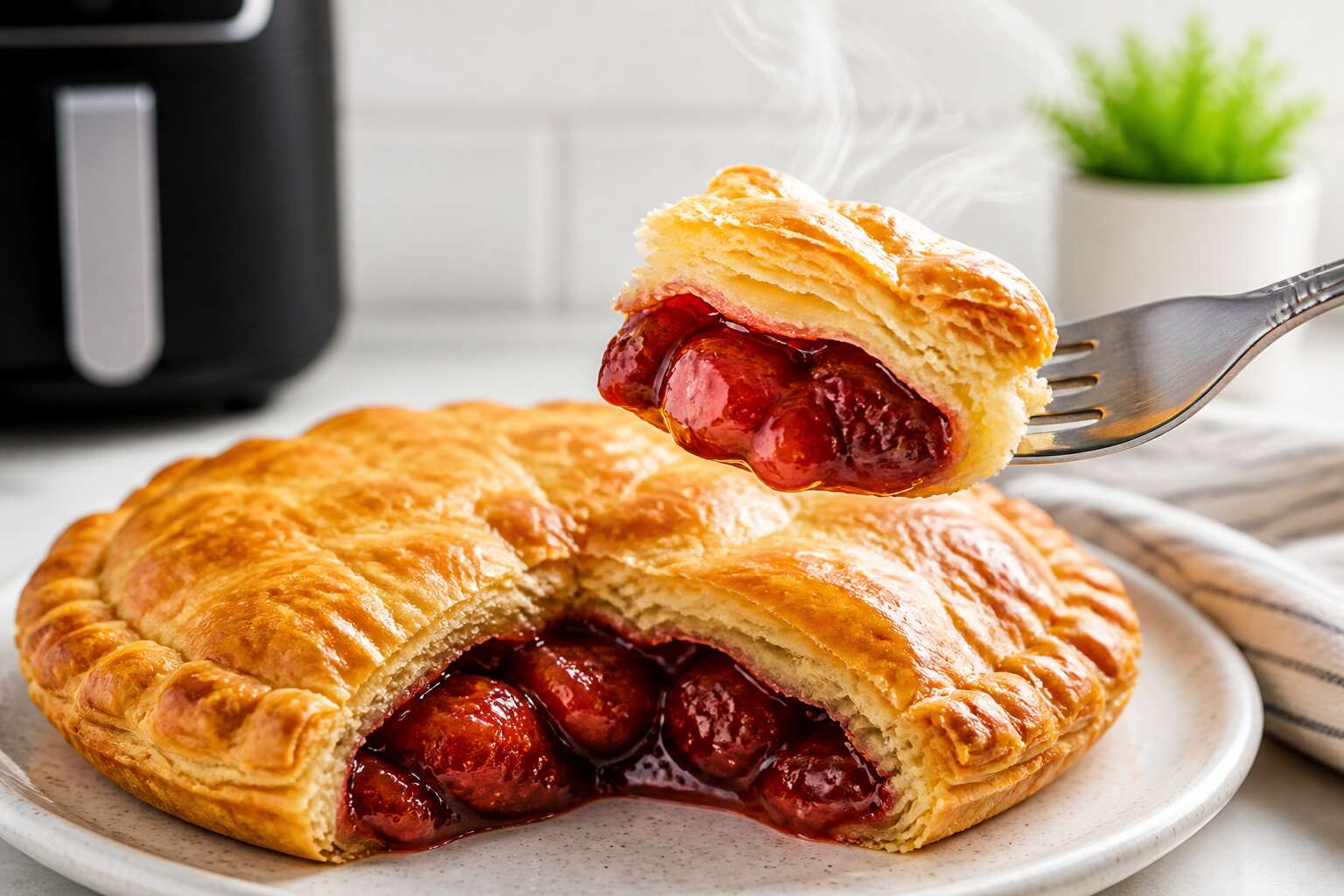
Why Use an Air Fryer for Frozen Pies
Speed and Convenience Compared to a Conventional Oven
Waiting 40 minutes for an oven to preheat feels like a lifetime when dinner is late. An air fryer changes that equation completely. The frozen pie in air fryer cooks in roughly half the time, because hot air circulates directly around the pastry. No need to heat up an entire kitchen, which matters during a South African summer.
I have found that convenience goes beyond minutes saved. You skip the heavy baking tray and the careful positioning of racks. Just place the pie in the basket, set the temperature, and get on with your evening. The results match a conventional oven, but the effort is far lower. That speed also means less electricity, a real benefit when power costs keep climbing.
Achieving a Crispy Crust Without Deep Frying
Rapid air movement wraps heat around every flake, drawing out moisture and leaving a golden shell. No batter, no submersion. The frozen pie in air fryer achieves a crust that rivals deep frying, but without the oil. The texture stays crisp because the fan works continuously. Deep frying coats pastry in fat, which can turn it heavy. Air frying lets the pastry rise naturally, creating layers that shatter when cut. This method avoids the lingering smell of frying oil in your kitchen.
Consider these benefits:
- no oil splatter
- lighter crust
- even browning
For an everyday meal, this approach offers a sensible shortcut.
Energy Efficiency and Smaller Batch Cooking
Eskom’s tariff hikes make every kilowatt hour feel personal. I rarely considered wattage until the bill arrived. A conventional oven draws 2000 watts to heat an empty cavity for one pie. The frozen pie in air fryer uses a fraction of that wattage and finishes faster. In a country where load shedding reshapes dinner plans, this matters!
Smaller batch cooking also changes the equation. Cooking one or two pies without firing up the entire oven is a quiet act of thrift. The air fryer cycles on and off, maintaining temperature rather than endlessly radiating heat into a cavernous box.
- Less wasted heat
- Lower electricity bill
- No preheating phase
For a solo evening meal or a late snack, the frozen pie in air fryer transforms a simple craving into a deliberate, efficient gesture.
Versatility Across Pie Varieties
A lone air fryer basket handles every pie imaginable, from peppered steak to melktert. I have yet to encounter a frozen pie that refused to cooperate. Savoury beef pies with rich gravy, chicken and mushroom pies, even mince and cheese combos, all respond well to circulating heat. Sweet options like apple or berry pies benefit from the same method without compromising their delicate fillings.
The frozen pie in air fryer manages varied crusts with equal competence. Flaky puff pastry emerges golden while shortcrust retains its structural integrity. Blind baking is unnecessary, which simplifies the process for home cooks.
South African bakeries supply endless permutations, and this appliance respects that diversity:
- Individual meat pies for lunch
- Family-sized fruit pies for dessert
- Hand pies with vegetable fillings
Each type demands slightly different timing, but rapid air circulation works with the pastry rather than against it.
Preparing Your Frozen Pie for the Air Fryer
To Thaw or Not to Thaw: Understanding the Differences
The moment you pull a frozen pie from the freezer, you face a pivotal choice. Thawing transforms the structure. A thawed pie behaves like a fresh one, but it risks a soggy bottom crust and a longer wait before air frying. Cooking from frozen, by contrast, locks in the pastry’s cold integrity and often produces a superior flake.
Both paths work for a frozen pie in air fryer, yet the results differ measurably:
- Thawed pies need roughly 15 percent less cooking time and will brown unevenly if the filling is too warm.
- Frozen pies protect the crimped edges from scorching and hold their shape far better.
- Semi-frozen pies, left at room temperature for 15 minutes, strike the most reliable balance.
I favour the semi-frozen route when cooking a frozen pie in air fryer. The cold centre stays stable while the outer layers relax, giving a golden crust without the wait.
The Importance of Preheating the Air Fryer
Preheating the air fryer before any frozen pie touches the basket is non-negotiable. Without a hot chamber, the pastry warms slowly and the filling may stay cold. Set your unit to 175 degrees Celsius and let it run for a full three minutes. This ensures the heating coil reaches peak output.
While the air fryer heats, prepare the pie itself. Brush the top with beaten egg, then make three small slits for steam. For a frozen pie in air fryer, place the pie on a perforated liner so the hot air circulates beneath.
- Check that the basket is free of residue.
- Give the pie at least 2 centimetres of space from the sides.
- Keep the drawer closed during preheat.
After the preheat cycle completes, slide the pie in and set the timer. This routine produces an even golden finish and avoids frozen centres.
Choosing the Right Size Pie for Your Basket
Choosing the right size pie for your basket is the difference between a flaky triumph and a pastey failure. A frozen pie in air fryer must sit with two centimetres of space around it. Measure the basket’s floor before shopping. A 14cm pie fits most four litre units. Anything larger will block the hot air.
Preparation matters equally. Brush the frozen pastry with beaten egg. Cut three small slits to vent steam. Do not thaw the pie first. These steps form the entire routine. Ignore anyone who suggests basting.
- Check the pie’s diameter on the box
- Compare it to your basket’s width
- Choose a pie that leaves the required clearance
When the pie fits properly, the crust crisps and the filling heats through. A snug pie causes cold centres and burnt edges.
Using Foil or Parchment Paper to Prevent Sticking
The air fryer basket retains scorch marks from every forgotten crust. For the frozen pie in air fryer, a barrier of parchment paper or foil stands between your pastry and the metal floor. Cut the paper to fit with a little overhang, creating crude handles. Flour the paper lightly before setting the pie down. This keeps the base intact when the filling bubbles over.
- Some bakers prefer foil for the frozen pie in air fryer, which conducts heat more aggressively.
- Parchment paper insulates gently, preserving a softer underside.
- Both prevent the sticking that ruins a golden crust.
The choice alters the texture. Foil risks a harder base. Parchment keeps the bottom tender. Whichever you trust, the paper must never block the air vents. A blocked vent turns a flaky promise into a steamed, soggy ruin.
Do You Need to Brush the Crust Before Cooking?
Brushing the crust before cooking is a quiet ritual that many ignore. For a frozen pie in air fryer, this step changes the texture of the pastry. Without it, the top stays pale and tough. With it, you get a shine that signals professional baking.
Choose your wash carefully. Egg white gives a crisp sheen. Milk encourages browning. Butter adds richness but can burn at high heat.
- One beaten egg with a teaspoon of water covers most frozen pies.
- A light layer of maple syrup works for sweet varieties.
- Saltwater is the secret for savoury ones.
Apply the wash after the pie has rested for five minutes. That lets the frozen surface warm slightly, so the liquid adheres instead of sliding off.
Air Fryer Temperature and Timing Guidelines by Pie Type
Fruit Pies: Apple, Cherry, and Berry
For fruit pies, the temperature and timing shift with the filling’s density and moisture content. A frozen pie in air fryer settings for apple typically needs 160°C for 35 to 40 minutes. The apples require time to soften without burning the pastry. Cherry and berry pies, with higher moisture and sugar, benefit from 170°C to set the filling quickly.
Different fruit pies have different needs:
- Apple: 160°C for 35 to 40 minutes
- Cherry: 170°C for 30 to 35 minutes
- Berry: 165°C for 32 to 38 minutes
The filling’s acidity influences how the crust browns. The halfway point reveals the crust’s progress. Bubbling filling and a golden crust signal doneness.
Custard and Cream Pies: Pumpkin, Pecan, and Cheesecake
Custard and cream pies demand a gentler hand. A frozen pie in air fryer with a pumpkin filling sets best at 150°C for 40 minutes. Pecan, with its syrupy centre, needs 160°C for 35 minutes. Cheesecake is the diva of the basket; it prefers 140°C and a slow 45 minutes. The temperature guidelines for these pies are simple:
- Pumpkin: 150°C for 40 minutes
- Pecan: 160°C for 35 minutes
- Cheesecake: 140°C for 45 minutes
Watch the edges. Custard does not bubble like fruit. When the centre has a slight wobble, it is nearly done. Let it rest. The residual heat finishes the job. Patience is a virtue, especially when the pie is this delicate.
Savory Pies: Chicken Pot Pie and Shepherd’s Pie
Savory pies follow different rules. Chicken pot pie has a saucy filling that must bubble. A frozen pie in air fryer with this filling needs 170°C for 30 minutes. Watch for the sauce breaking through the pastry vents. Shepherd’s pie, insulated by its mashed potato topping, requires 160°C for 35 minutes. The potato blocks direct heat, so the centre takes longer to warm.
A probe thermometer settles the question. The filling should reach 75°C. The pastry will be deep golden and crisp when done. A shallow pie cooks faster than a deep one. Adjust the time by five minutes if needed. Check the halfway point.
Mini Pies, Hand Pies, and Empanadas
Mini pies, hand pies, and empanadas follow a different clock than their full-sized relatives. Their smaller mass means less time under heat, but crowding the basket can still leave cold centres. A frozen pie in air fryer set to 180°C handles most of these formats well.
Use these starting points:
– Mini pies: 180°C for 12 to 15 minutes
– Hand pies: 180°C for 10 to 12 minutes
– Empanadas: 190°C for 8 to 10 minutes
Filling weight changes the final time. Meat empanadas need longer than fruit versions. Turn each pie halfway through its cook so the underside crisps evenly. A hollow sound when tapped signals a fully baked crust.
Frozen Pizza-Style Pies and Vegetable Pies
Frozen pizza-style pies hold heat in their dense tomato base, which makes the usual browning tests unreliable. A frozen pie in air fryer set to 190°C needs 9 to 12 minutes, but the size changes that window. Use these starting points:
- Pizza pockets: 190°C for 8 to 10 minutes
- Deep-pan personal pies: 190°C for 11 to 13 minutes
Flip each pie at the halfway point. The underside needs direct contact with the basket to crisp.
Vegetable pies need a longer cook. A frozen pie in air fryer at 180°C takes 14 to 16 minutes for a standard individual portion. Spinach and feta, a common South African filling, releases moisture that steams the pastry from within. Shake the basket once at eight minutes. I find the tap test more reliable than a timer alone. A bright, sharp tap means the moisture has finished cooking off.
Adjusting for Different Air Fryer Models and Wattages
Every frozen pie in air fryer responds differently to your machine’s wattage. A 1500W model crisps a standard pie at 180°C for 14 minutes. An 800W unit needs closer to 18. Check the label before setting the timer.
For delicate fillings, lower the heat and extend the window. The basket size matters too. A crowded basket restricts airflow, so cook one pie at a time.
- 1000W or below: add 2 to 3 minutes
- 1200W to 1500W: use the base times
- 1600W or above: reduce by 1 to 2 minutes
Rotate the basket halfway through. Cheaper models have hot spots. Your frozen pie in air fryer may need a probe test if the crust colors too fast. Trust the internal temperature, not just the timer.
Tips for Achieving a Golden, Flaky Crust
Applying an Egg Wash or Butter Glaze
There is a quiet magic in pulling a perfectly bronzed frozen pie in air fryer from the heat. The secret often rests not in the filling, but in what you brush across the pastry before cooking. A beaten egg, whisked with a splash of water, creates that glossy mahogany sheen on the surface. The concentrated airflow sets a crisp barrier that flakes beautifully with each forkful.
Butter offers a different kind of temptation. Melted and painted on with a soft pastry brush, it seeps into the outer layers, encouraging a delicate browning that smells like the farmhouse kitchens of my childhood. A light hand matters more than precision. Too much liquid can steam the crust, leaving it leathery. A gentle coating, perhaps applied twice, builds character without weighing down the pastry. That scent alone is enough to make the heart ache with longing.
Mid-Cooking Rotation for Even Browning
The hot air inside an air fryer basket rarely moves evenly. The rear zone often runs hotter than the front, which means one edge of the crust will bronze faster than the other. A simple quarter turn of the frozen pie in air fryer at the halfway point corrects this imbalance.
Consider what your eyes tell you when you pause the cycle. The colour should develop gradually. If the near side remains pale while the far side deepens, rotate the frozen pie in air fryer to encourage even browning. If the pastry puffs unevenly, turning the basket prevents one side from cooking into a dense layer while the other crisps too far.
Some cooks rotate twice during a longer bake. Others find a single turn sufficient. Your air fryer model and the pie’s dimensions dictate the rhythm. The goal is a crust that colours evenly across its entire surface.
Using the Air Fryer Lid or Basket Position to Your Advantage
The Maillard reaction begins at 154 degrees Celsius. Where the frozen pie in air fryer sits inside the basket decides whether the crust bronzes or burns. The upper rack reaches the coil quickly, so the pastry darkens fast. The lower rack allows the filling to set first. Some models have a louvered lid. Open it to release fruit pie steam, preventing a soggy top.
Check the manual for the shelf height. Put the pie low, then move it up for the final minutes. Leave gaps around the basket for airflow.
The lid itself can shield the pastry. A crack in the lid redirects heat, keeping the edges flexible while the centre cooks through. In many units, the hinge sits at the rear, so the front runs cooler. Turning the frozen pie in air fryer once at the halfway point fixes that. Position controls the texture more than the temperature display.
Checking for Doneness with a Fork or Toothpick
A fork or toothpick does two jobs when you cook a frozen pie in air fryer. It tests the filling and protects the crust. Pierce the pastry only at the centre; that one hole lets steam escape, preventing sogginess. The flake benefits from a light touch. Press the fork on the rim; it should crackle, not bend. Then slide the toothpick into the fruit. Clean edges mean the filling is set. A few crumbs clinging to the wood signal the perfect moment.
- Lift the pie with a folded towel; resistance in the middle tells you it needs more time.
- Tap the top with the fork handle; a dull thud means moisture is trapped.
Let the pie breathe for four minutes. The crust firms while the interior calms. That pause separates a good bake from a great one.
Resting Time to Let the Crust Set
Chasing that golden crust requires patience. Brush the surface with a thin layer of cold butter, then place the frozen pie in air fryer without preheating. The gradual temperature rise melts the fat and laminates the dough. I slide the basket out once to rotate the pie. This motion distributes heat evenly.
Resting time matters. After the timer ends, let the pie sit for four minutes on a wire rack. The crust sets, and the exterior hardens. Do not cut immediately.
- Keep the pie uncovered.
- A serrated knife prevents crushing.
That pause makes the difference.
Common Mistakes to Avoid When Cooking Frozen Pies in an Air Fryer
Overcrowding the Basket and Blocking Air Circulation
One of the most persistent frustrations when cooking a frozen pie in air fryer is the temptation to cram as much as possible into the basket. This urge is understandable, especially when time is short and hunger is loud. However, the appliance relies on rapid hot air circulation to achieve that golden, flaky texture. When the basket is overcrowded, the airflow becomes a gentle drift instead of a forceful current. The result is often a pale crust, unevenly cooked filling, and a longer cooking time that defeats the entire purpose of using the fryer.
Many people also place a large pie directly in the center and forget about the edges. The basket’s design directs heat through the bottom and sides, so a pie that fits snugly against the walls will block the vents. This creates hot spots and cold zones. A better approach is to leave a small gap around the pie, allowing the heated air to move freely. If you must cook two small pies, stack them on separate racks or cook them one after the other rather than side by side.
Consider these common pitfalls before you start:
- Using a pie that touches the basket walls completely
- Filling the basket with multiple layers of food
- Forgetting to leave a finger’s width of space for air movement
Another frequent error involves ignoring the wire rack that often comes with the air fryer. This rack is not an accessory to be stored away; it is a vital tool. Placing the pie directly on the basket floor can trap moisture underneath, leading to a soggy base. The rack lifts the pie into the air stream, promoting even browning on every surface. When you make room for proper airflow, the frozen pie in air fryer transforms into a beautifully crisp creation with a tender interior.
Setting the Temperature Too High or Too Low
Setting the temperature too high when cooking a frozen pie in air fryer is a common failure. The outer crust blackens into an acrid shell, while the fruits or custards inside remain frozen. The appliance’s rapid heat does not penetrate faster; it merely scorches the surface.
Too low a temperature produces the opposite problem. The pastry turns pale and leathery, lacking the crisp flake that only proper heat can deliver. The center may eventually cook, but the texture evolves into something dense and chewy.
- Excessive heat creates burnt edges and raw fillings.
- Insufficient heat leaves a sad, bleached crust.
A balanced temperature allows the frozen pie in air fryer to become golden and tender simultaneously.
Skipping the Preheat and Underestimating Cook Time
Cooks who skip the preheat to save time pay for it in texture. A cold basket steals heat from the frozen pie in air fryer the moment it lands, and the pastry begins to sweat before it can crisp. That stolen warmth yields a pale, soggy base that never recovers.
Underestimating cook time creates a similar treachery. Frozen fillings hold cold stubbornly, and even when the top looks bronzed, the interior can remain a crystalline slush. Many recipes assume smaller portions, yet a full frozen pie in air fryer carries dense mass that needs patient minutes.
Watch for these warning signs:
- A crust that browns unevenly on one side only
- Filling that bubbles at the edges but stays cold in the centre
- A bottom that turns doughy despite a golden lid
Forgetting to Shield the Crust Edges
There is a quiet violence in watching a crust edge darken while the filling stays cold. The rim of a frozen pie in air fryer takes the heat first, unprotected by the mass of fruit or custard beneath. It scorches. The centre barely warms. This is a timing problem, but it feels like a moral one, because the baker did everything right except one small act of protection.
Foil works because it interrupts the airflow precisely where it does harm. A loose band around the perimeter deflects the blast without trapping steam. The butter in the pastry still melts. The flour still crisps. It simply happens slower, at the pace the filling demands.
People skip this step out of impatience or forget it in the rush of dinner. The result is predictable. Edges that crumble into ash, a filling that never surrenders its chill. The fix costs thirty seconds and changes everything.
Failing to Check the Bottom Crust for Sogginess
The top crust boasts a perfect golden glow. The edges look as though they survived a desert. Then you lift the pie from the basket and find a bottom layer that is wet, dense, and deceptively quiet about its failure. The underside of a frozen pie in air fryer rarely announces its trouble. It hides beneath the filling.
Sogginess forms when the pastry steams against the metal basket. The heat cannot escape, so moisture pools. The flour absorbs it and turns to paste. This differs from undercooking. Additional time only scorches the top while the bottom worsens.
Check for these signs before removing the pie from the basket:
- The crust separates from the filling when tilted
- A damp ring remains on the parchment or foil
- The base feels cold while the surface radiates heat
If the bottom of your frozen pie in air fryer fails this inspection, the air never reached the surface that mattered most.
Using the Wrong Type of Pie for Air Frying
Some frozen pies should never meet the air fryer. A meringue pie, for example, will weep under the fan’s onslaught. The air fryer circulates heat with unusual ferocity, which is excellent for pastry but cruel to fragile toppings.
Consider the structure of the pie before committing. A frozen pie in air fryer needs a filling that holds its shape and a crust that won’t shatter. The wrong candidates include:
- Pies with whipped or meringue toppings
- Pies with loose crumb toppings
- Pies with excessively watery fruit fillings
These varieties fail in the basket. The heat concentrates on the surface while the interior remains stubbornly cold. Dense, robust pies handle the air circulation far better, which is why many manufacturers print air fryer instructions only on specific product ranges.
Serving and Storing Your Air-Fried Frozen Pie
Letting the Pie Cool Before Slicing
The timer signals done, but the pie is not. A frozen pie in air fryer holds its heat far longer than the basket suggests. Cutting straight into it will send molten fruit or custard across the plate. Let the pie rest on a wire rack for ten minutes. That pause allows the filling to set and the crust to hold its structure, so your first slice comes out clean.
Once the pie reaches room temperature, handle leftovers with the same care. Wrap slices tightly or place them in an airtight container. Refrigerate for up to three days. For longer storage, freeze the cooled slices.
- Place parchment paper between stacked slices to stop them from fusing.
- Write the date on the container so you know what you are dealing with later.
- Reheat single portions in the air fryer at 160°C for three minutes.
That quick reheat brings back the crisp edges and warm centre, making a frozen pie in air fryer worth cooking twice.
Pairing Suggestions: Ice Cream, Whipped Cream, or Savory Sides
A frozen pie in air fryer comes out piping hot and begging for a companion. Vanilla ice cream is a classic partner for apple or berry fillings. The cold cream cuts through the heat and rounds out the spice. Whipped cream offers a lighter touch, letting the fruit flavour lead the way. For a savoury chicken pot pie, a simple green salad with a lemony dressing works better than anything sweet.
Some folks swear by a dash of cinnamon on top of their ice cream. I prefer a drizzle of honey over the crust itself. Whatever you choose, keep the side simple.
- Pair fruit pies with vanilla ice cream or custard.
- Pair custard pies with a dusting of nutmeg.
- Pair savoury pies with a tangy slaw or roasted vegetables.
How to Store Leftover Pie Properly
Serving a frozen pie in air fryer is a study in timing. The crust needs to be golden while the filling is bubbling. Once you slice it, the heat escapes quickly, so have your plates ready. I always warn my family to stay close when the timer goes off! Leftovers are inevitable when the pie is large, and storing them properly preserves the texture.
Wrap each slice individually in cling film. Refrigerate for up to three days. Reheating in the air fryer at 160°C for four minutes revives the flaky crust. The microwave is a last resort, because it turns pastry soggy.
For longer storage, freeze the wrapped slices in a resealable bag. Label with the date. A frozen pie in air fryer can go straight from freezer to basket, but a slice needs a few extra minutes at a lower temperature.
Reheating Individual Slices in the Air Fryer
Thirty seconds too long and a custard slice turns to soup in the basket. Reheating a slice asks for attention, not guesswork. A frozen pie in air fryer keeps its composure when you respect its rhythm. Lay each slice flat with space around it, pastry facing the element.
Check these details:
– The crust edges should look dry and pale gold.
– The filling should shiver when the basket is shaken.
– The underside should lift cleanly from the mesh.
Run the air fryer at 140°C for three minutes. Test the centre with a fork. Add increments of thirty seconds if needed. Serve on warmed plates, because a slice loses its warmth quickly once it leaves the basket.
Can You Freeze an Air-Fried Pie for Later?
After the pie leaves the basket, serve it within minutes. The crust holds its structure, and the filling stays settled. For leftovers, let the pie cool completely before wrapping. A frozen pie in air fryer reheats best when stored properly.
You can freeze an air-fried pie for later, but expect some loss of crispness. Wrap each slice tightly in cling film, then place in a freezer bag. To re-freeze a whole pie, it is safer to portion it first:
- Cool to room temperature.
- Wrap in cling film and foil.
- Label with the date.
Frozen pies that were air fried once can last for a month. Reheat from frozen at 150°C for five minutes, checking the centre. The texture will be softer, yet the flavour remains.


0 Comments