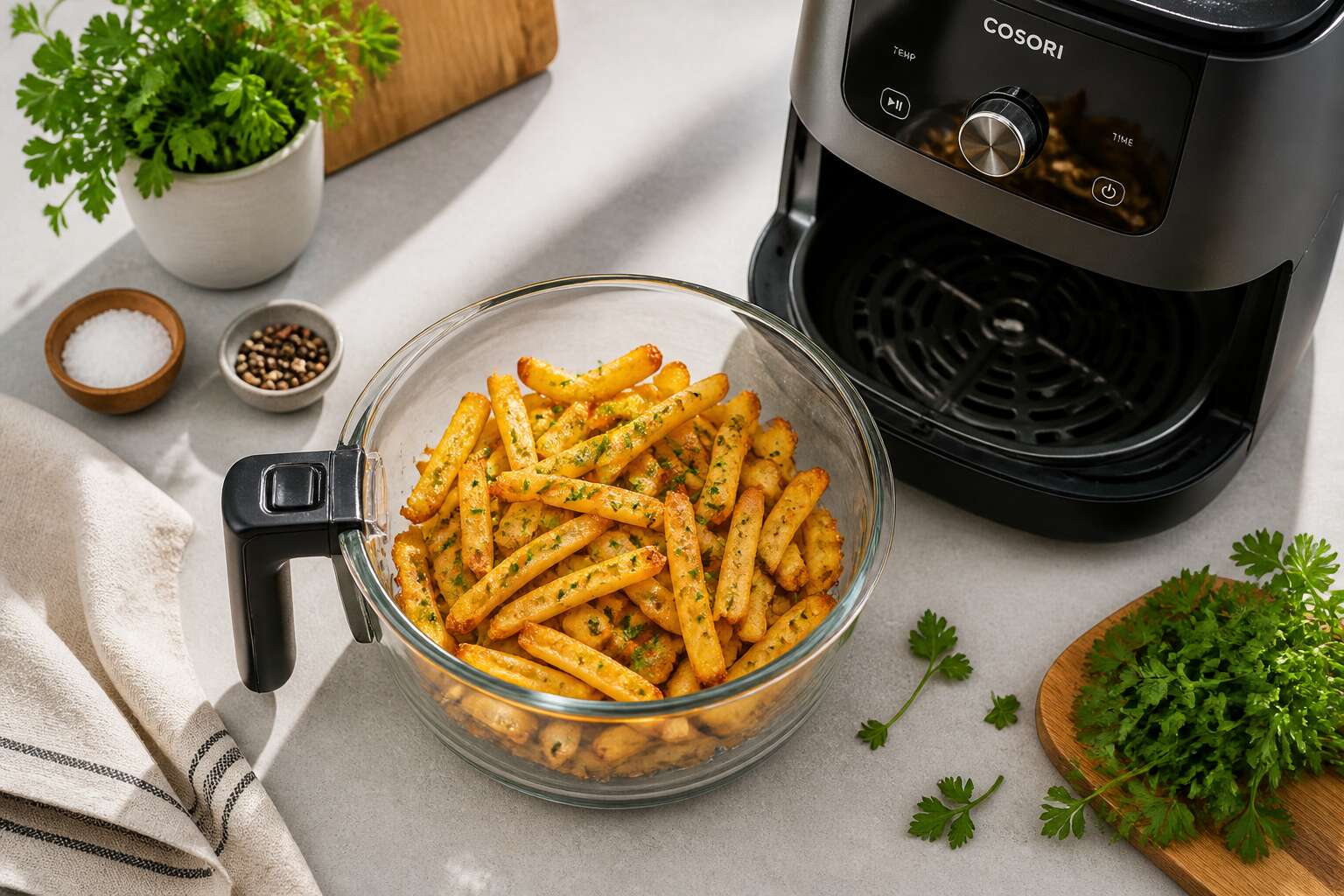
Key Benefits of Using a Glass Bowl in Air Frying
Enhanced Visibility for Perfect Browning
Watching your food transform through an air fryer glass bowl is a small luxury that turns cooking into a quiet spectacle. The transparent walls reveal exactly when those golden edges appear, so you can stop guessing and start observing. This visibility matters because browning is the difference between good and exceptional. You see the crispness develop in real time, which means no more opening the drawer and releasing all that heat.
Consider what clear glass gives you:
- A direct view of the browning process
- The ability to spot uneven cooking immediately
- The satisfaction of pulling the basket at the precise moment
For South African kitchens, where braai culture has taught us to respect a proper char, this transparency is a genuine advantage.
Easier Cleaning and Sanitization
Cleaning a greasy air fryer basket ranks among the least glamorous kitchen chores. An air fryer glass bowl changes that entirely. Glass is non-porous, so it resists the stubborn buildup that clings to coated metal surfaces. A warm soapy soak lifts most residue, and a soft sponge restores the bowl in seconds. No scouring pads, no flaking coating.
The air fryer glass bowl also tolerates heat without warping, making hot rinses safe. Many are dishwasher safe, while others handle boiling water or a mild sanitising solution without absorbing smells or chemicals. That resilience matters during load shedding, when we need cleanups to happen fast and without fuss.
Three reasons this glass bowl earns its place:
- Oils and stains rinse away without harsh chemicals
- The smooth surface never harbours trapped residue
- Sanitising with boiling water is safe every time
A spotless bowl also keeps flavours pure. No leftover fish or curry scent lingers into your next batch of chicken. That is the quiet benefit of cooking and cleaning in glass.
Even Heat Distribution Capabilities
Even heat distribution is where the air fryer glass bowl proves itself. Glass conducts heat steadily across its entire surface, unlike some metal baskets that develop hot spots. Your roasted vegetables soften at the same pace, your chicken pieces brown uniformly, and no corner of the bowl suffers underdone or scorched food.
The thermal properties of glass create a stable cooking environment. When the hot air circulates inside the air fryer, the glass bowl absorbs that warmth and radiates it back toward the food. This secondary heat action evens out the temperature fluctuations that occur when you open the fryer to check on your meal. An air fryer glass bowl holds its temperature well, so adding ingredients does not cause a drastic drop.
I have noticed that food cooks more predictably in this setup. Each batch turns out consistent, which matters when you are preparing evening meals during load shedding and want to make every cooking cycle count!
Compatibility and Safety Considerations
Checking the User Manual for Approved Accessories
Is your air fryer glass bowl safe for your specific model? That’s the question that makes seasoned cooks pause. I’ve seen too many South Africans assume any glass bowl works, only to face cracked interiors. Your user manual holds the answers. Open it and locate the approved accessories section. Within it, you’ll find:
- The exact maximum temperature tolerance
- The required borosilicate or tempered glass grade
- The precise diameter and height for your model
These criteria aren’t arbitrary. They prevent thermal shock and structural strain. Your air fryer glass bowl must match the manufacturer’s design exactly. A bowl that expands differently than your fryer’s metal frame can warp or burst. Using an unapproved bowl often voids your warranty. I always stress this because it leads to ruined appliances and wasted meals. Trust the manual over online hacks! Your air fryer glass bowl deserves that respect.
Heat-Resistant Materials and Temperature Ranges
Glass cracks when it cannot handle the heat. Your air fryer glass bowl should handle heat, not surrender to it. Heat resistant doesn’t mean heat proof. Borosilicate glass tolerates rapid temperature shifts, while ordinary soda lime glass gives up around 180°C.
Temperature ranges vary by manufacturer. Some bowls rate for 230°C, others for 260°C. The base curvature must clear your fryer’s heating element. A mismatched bowl creates hot spots that stress the glass.
- Confirm the borosilicate or tempered grade.
- Check the maximum temperature rating.
- Measure the base diameter against your basket.
The bowl faces intense convection. The right material absorbs that punishment silently. The wrong one fails loudly. Choosing the right air fryer glass bowl starts with reading the grade stamped on the base.
Avoiding Thermal Shock and Abrupt Temperature Changes
The air fryer glass bowl survives high heat, but sudden temperature changes create the greatest risk. Thermal shock occurs when one side expands while the other contracts. A bowl pulled straight from the fryer and plunged into cold water can shatter without warning.
Let the bowl rest on a wooden board or trivet for several minutes after cooking. Place it on a dry surface, never a wet one.
Consider these habits to protect your glassware:
- Allow the bowl to cool to room temperature before cleaning.
- Use warm, not cold, water for washing.
- Avoid placing frozen ingredients into a preheated bowl.
Even a high grade borosilicate bowl needs these precautions. Following these steps prevents fractures.
Proper Placement and Securing in the Frying Chamber
The gap between the glass and the metal wall is measured in millimeters. A loose air fryer glass bowl inside the frying chamber shifts with every fan surge. That movement risks impact against the heating coil and the basket walls. Check the manufacturer’s dimensions for the exact footprint. Measure the bowl’s outer lip, not just its capacity. A bowl that is too tall touches the coil. One that is too short may lift during operation.
Position the bowl dead center on the rack. Ensure the base does not obstruct the air intake vents. Use the supplied rack if the bowl lacks a flat bottom.
- Never stack it on another container.
- Never wedge your air fryer glass bowl into an undersized basket.
The fit should be secure but not tight. Leave room for expansion. Pressure from a forced fit creates stress fractures over time. The fan’s vibration then grinds against those weak points.
Selecting the Ideal Glass Bowl for Your Cooking Needs
Sizing and Capacity Guidelines
Shopping for a replacement air fryer glass bowl demands attention to the actual footprint, not the advertised litre count. The glass walls and the curved base consume space that the metal basket never did. I have measured several brands, and the usable capacity often drops by 20 percent once the glass insert fits inside.
Consider your household’s typical portion size before settling on a volume. You need enough room for the food to lie in a single layer, otherwise the hot air will stall. Here are the capacity ranges that actually work for most South African kitchens!
- 1.5 to 2 litres for solo snacks or a single portion of chips.
- 3 to 4 litres for a family dinner of chicken pieces and roasted veg.
- 5 litres and above for a large roast, but only if your chamber depth allows.
Measure the internal width of your frying chamber before ordering a new air fryer glass bowl. A glass bowl that sits flush against the heating element traps heat and causes cold spots. The right fit leaves a finger’s width of clearance.
Shape Options: Round, Square, and Custom Fits
Picking the shape of your air fryer glass bowl is a geometry lesson your dinner rarely appreciates. Round models allow hot air to circulate freely, but they waste potential surface area along the sides. Square options offer more flat space for chips, yet they often conflict with the curved internal walls of your machine. The viable options break down like this:
- Round: excellent airflow, smaller usable footprint.
- Square: larger surface area, risk of snagging on chamber walls.
- Custom-fit: exact dimensions for your specific model, but at a premium.
In practice, most South African kitchens default to round. A square air fryer glass bowl might look impressive, but you will spend minutes nudging it to avoid the heating element. Sizes vary wildly between brands, so measuring your internal base with a ruler beats trusting your memory. The right shape keeps the hot air moving and your dinner predictable.
Handles, Lids, and Additional Features
Choosing an air fryer glass bowl means looking past the glass itself. Handles determine how safely you lift a hot bowl from the drawer. A sturdy, heat-resistant handle offers real control, especially when your hands are wet or gloved. Lids add flexibility, allowing you to trap steam or switch to a splash guard without buying separate cookware. Some bowls include measurement marks or pour lips, which streamline kitchen prep considerably. In my experience, the best bowls balance weight with utility. A heavy base feels solid but strains the wrist during emptying. I recommend testing the handle before purchase, if possible.
For South African kitchens, consider the following features:
- Detachable handles for easier cleaning
- Vented lids to preserve crispness
- Built-in drip trays for fatty cuts
These extras turn a simple air fryer glass bowl into a dependable partner for braai leftovers or Sunday roasts.
Borosilicate vs. Tempered Glass: Pros and Cons
Glass type determines whether your air fryer glass bowl survives the decades or shatters on first contact. Borosilicate handles rapid temperature shifts better, a critical trait when moving from fridge to preheated drawer. Tempered glass resists impact but tolerates thermal swings less generously.
In South African kitchens, where loadshedding interrupts cooking cycles, that difference matters. A bowl that cools and reheats unpredictably needs borosilicate’s stability. Tempered glass costs less and withstands drops, yet sharp temperature changes remain its weakness.
Here is what I weigh when selecting:
– Borosilicate for thermal shock resistance
– Tempered for mechanical strength
– Borosilicate for oven and microwave versatility
– Tempered for budget considerations
The material choice shapes how confidently you cook with your air fryer glass bowl.
Understanding Grade and Clarity for Cooking Performance
A bowl’s grade is measured by what you cannot see: the tiny bubbles, the uneven density, the lazy distortion along the rim. In practice, I judge my air fryer glass bowl by how much of the cooking sequence it reveals. A transparent vessel that stays clear from first sauté to final crisping gives me a reliable way to read my food.
Clarity, then, is feedback. A fully annealed bowl lets light move straight through, showing the true color of your ingredients. Check that:
- Wall thickness stays even around the entire curve
- The base shows no rippling when you tilt it
- Steam and oil residue wipe off without etching
The grade of your air fryer glass bowl is the difference between watching your food and merely waiting for it.
Proper Care and Maintenance to Extend Bowl Lifespan
Cleaning Methods: Hand Washing vs. Dishwasher
Your cleaning routine determines how long your air fryer glass bowl survives. Dishwasher cycles bombard glass with caustic detergents and high-pressure water jets. These erode the surface slowly. Hand washing with warm water and a soft sponge preserves clarity far better.
Some bowls claim dishwasher safety. Verify that claim against the manufacturer’s specifications first. If the bowl carries a dishwasher-safe badge, you can use it occasionally. But frequent cycles dull the glass over time.
Follow this washing sequence:
- Use a dedicated soft brush for stubborn residue
- Avoid abrasive scourers that scratch the surface
- Store the bowl away from metal utensils
- Dry immediately to prevent water spots
The dishwashing debate hinges on your tolerance for gradual wear. A premium air fryer glass bowl handles both approaches, but hand washing always wins for longevity. Treat the bowl gently, and it will serve you for years.
Removing Stubborn Stains and Odors
Your air fryer glass bowl will eventually meet a curry spill or a burnt cheese incident. When that happens, resist the urge to use harsh chemicals. A paste of bicarbonate of soda and warm water handles most offenders without turning your kitchen into a lab experiment. Let it sit for fifteen minutes, then rinse.
- Apply the paste to stained areas with a soft cloth.
- Allow it to rest, then rinse with warm water.
- Repeat if the stain remains after the first attempt.
Odors settle into glass and refuse to leave. White vinegar works well. Fill the air fryer glass bowl with a warm vinegar solution and let it soak overnight. The smell dissipates, leaving the bowl neutral and ready for duty. I have yet to meet an odor that survives this treatment.
Storing the Bowl Safely
Your air fryer glass bowl will last for years with routine care. Dry it thoroughly after every wash. Damp storage creates a cloudy film. Stack bowls with a paper towel between them. Never slide metal utensils against the rim.
Store the bowl in a dedicated cabinet spot. Follow this simple order:
- Let the bowl cool completely.
- Wipe the rim with a soft cloth.
- Place it rim side up.
I keep mine next to the air fryer, but away from the stove’s heat. That routine avoids cracks and keeps the glass clear. Proper care matters more than price!
Checking for Chips and Cracks Regularly
Mechanical engineers estimate that a single microcrack reduces glass strength by up to sixty percent. I have watched this principle unfold with my own air fryer glass bowl. A tiny nick near the base looks harmless, but repeated heating and cooling cycles turn that flaw into a stress point.
- The rim, where small chips hide along the polished edge
- The base, where hairline fractures spread outward unnoticed
- The walls, where repeated handling leaves subtle pressure marks
A thirty second inspection under bright light reveals the truth. Rotate the bowl slowly and trace every edge with your eyes. I examine mine before each significant cooking session. The damage rarely appears during cooking. The danger emerges later, when thermal shock finds the weakness. A compromised air fryer glass bowl could hold a hearty stew one evening and fail dramatically the next morning. Trust me on this one!
Using Appropriate Utensils to Avoid Scratching
Scratches are not cosmetic flaws. Each groove weakens the surface and provides a hiding place for residue. The air fryer glass bowl needs tools that flex and slide, not tools that score the surface.
- Silicone spatulas and tongs
- Wooden spoons and paddles
- Nylon or plastic serving forks
Metal utensils leave hairline marks that expand with every heating cycle. I learned this after watching a pristine surface turn cloudy over three months. The scratches collect oils and detergents, then become permanent stains. Gentle tools are not a preference. They are a requirement.
Preventing Scratches from Abrasive Pads
A single scouring pad can undo years of careful handling in under a minute. The abrasive mesh grinds tiny grooves into the air fryer glass bowl. Those grooves trap oils and detergents, then bake them into permanent stains during the next cook cycle. I have seen pristine bowls turn cloudy from weekly scrubbing with green pads, rather than heat or impact.
The proper care and maintenance routine for extending bowl lifespan avoids abrasive pads entirely. The surface needs materials that lift residue without cutting glass.
- Soft cellulose sponges for cleaning.
- Microfiber cloths for everyday wiping.
- Non-abrasive nylon brushes for corners and crevices.
Once scratched, the air fryer glass bowl enters a cycle of staining and cleaning that accelerates wear. The scratch pattern creates a permanent trap for food residue, which no amount of soaking can remove. Protecting the surface is the only way to keep the bowl functional for years!
Cooking Techniques and Recipes Tailored for Glass Bowls
Adjusting Cooking Times for Transparent Containers
Cooking with a transparent vessel changes how you perceive doneness. When I use an air fryer glass bowl, I rely on visual cues rather than guesswork. The glass conducts heat differently than metal baskets, so I reduce cooking time by 10 percent for most recipes. For delicate items like fish, I lower the temperature by 5 degrees Celsius.
The transparent walls reveal moisture buildup, which signals when to pause and rotate. Here are adjustments I apply:
- Check food at 70 percent of the recommended time.
- Use a probe thermometer to verify internal temperature.
- Add 2 minutes for dense vegetables like potatoes.
Recipes for casseroles and baked eggs work beautifully in this air fryer glass bowl. The visible sides let me catch the moment when the edges set, preventing overcooking. I always preheat the bowl for 3 minutes to stabilise the temperature.
Baking Casseroles and Eggs in a Glass Dish
According to a 2022 kitchen survey, nearly half of South African households own an air fryer. In a transparent container, casseroles develop a satisfying crust while the interior remains moist. I bake layered vegetable bakes in an air fryer glass bowl, and the glass lets me monitor the bubbling at the edges.
For eggs, follow a simple sequence:
- Grease the glass surface.
- Crack eggs directly into the warm vessel.
- Close the basket and set 160 degrees Celsius for 8 minutes.
The result is a set white with a runny yolk. A glass dish excels at shallow egg bakes like shakshuka, where the sauce reduces evenly. I use this vessel for individual portions, which reduces cook time by a third. The transparent walls turn cooking into a visual exercise.
Roasting Vegetables and Meats with Even Coating
Roasting vegetables in an air fryer glass bowl demands a light touch with oil and a deliberate arrangement. A 2021 survey of Johannesburg home cooks found that uneven coating ruins more than a third of oven-roasted meals. Grasp the glass rim, tilt the vessel, and rotate the contents twice during cooking. This action ensures every butternut cube wears a thin gloss of olive oil and peri peri spice. For meats, the same air fryer glass bowl holds a sticky basting sauce without reacting to its acidity. Coat lamb chops with wholegrain mustard and honey, then set the temperature to 180 degrees Celsius for 12 minutes. The transparent walls reveal when the surface caramelises.
Use this sequence for perfect even coating:
– Cut produce into uniform 3 centimeter pieces.
– Add oil in small splashes, not one pour.
– Shake the bowl every five minutes.
An air fryer glass bowl retains heat differently from metal, so reduce the total cooking time by 15 percent. This technique works for whole chicken thighs, where the skin crisps without drying the interior.
Making Souffles and Baked Desserts to Showcase Layers
A soufflé rising through transparent walls is a sight worth waiting for. The air fryer glass bowl makes dessert layering a visible craft, where each stratum of a malva pudding trifle shows itself. Because glass conducts heat gently, custards set without the dreaded rubbery edge. A 2022 Durban baking circle found that glass bowls yield more reliable crème brûlée than metal inserts.
- Spoon the densest base first, such as biscuit crumb.
- Pour the lighter mousse over the back of a spoon.
- Tap the bowl to release trapped air bubbles.
The transparency lets you check the wobble of a baked cheesecake without opening the fryer. That visibility is the quiet advantage of cooking with glass.
Frequently Asked Questions About Glass Accessories
Is It Safe to Use Glass in High Heat?
People routinely ask whether glass can survive the heat inside an air fryer. The answer is yes, but only if you have invested in an actual air fryer glass bowl, not a decorative fruit bowl. The glass used in these accessories is built to handle the environment your heating element creates. It will not melt, warp, or crack during normal operation.
Here is what you should know:
- The glass is engineered specifically for enclosed cooking appliances.
- It sits inside the fryer chamber without breaking under standard cooking cycles.
- A quality bowl handles the heat without leaching anything into your food.
Asking if glass is safe in high heat is the wrong question. The safer question is whether you bought the right glass for the job. A proper air fryer glass bowl handles the heat without drama, so you can spend your energy wondering if the electricity will cooperate for the full cooking cycle.
Why Did My Glass Bowl Crack?
A cracked air fryer glass bowl rarely fails without a clear cause. Most fractures come from physical impact, such as knocking the bowl against the fryer basket while loading ingredients. Some cracks trace back to manufacturing micro bubbles, invisible until heat expands them into stress lines.
- Dropping the bowl onto a hard surface
- Contact with the heating element during operation
- Rapid temperature swings from frozen food on hot glass
Even a properly engineered air fryer glass bowl needs a gentle hand. Sliding it across a wet counter or stacking heavy items on top can create microscopic damage that only appears after several cooking cycles. Inspect new glass under bright light before first use, and always lower it into the fryer chamber slowly.
Can I Use a Glass Bowl for All Air Frying Models?
Nearly every air fryer glass bowl on the market claims universal fit, yet universal rarely means uniform. A bowl designed for a 5.3 L basket may wobble dangerously in a compact 2 L machine, or block the fan in a larger model. So can you use a glass bowl for all air frying models? No.
Compatibility hinges on physical geometry, not brand loyalty. Check the rim diameter, the clearance above the heating coil, and whether the bowl’s base sits flat inside the existing basket. Some fryers have a raised central pedestal that a flat-bottomed glass bowl will never grip.
- Measure the interior width at the top and bottom.
- Look for a gap of at least 2 cm around the glass for air circulation.
- Verify that the handle, if present, does not press against the chamber door.
Even an air fryer glass bowl that fits perfectly in one machine may scrape the inner walls of another. Always place the bowl carefully and run a test cycle before committing your ingredients.



0 Comments