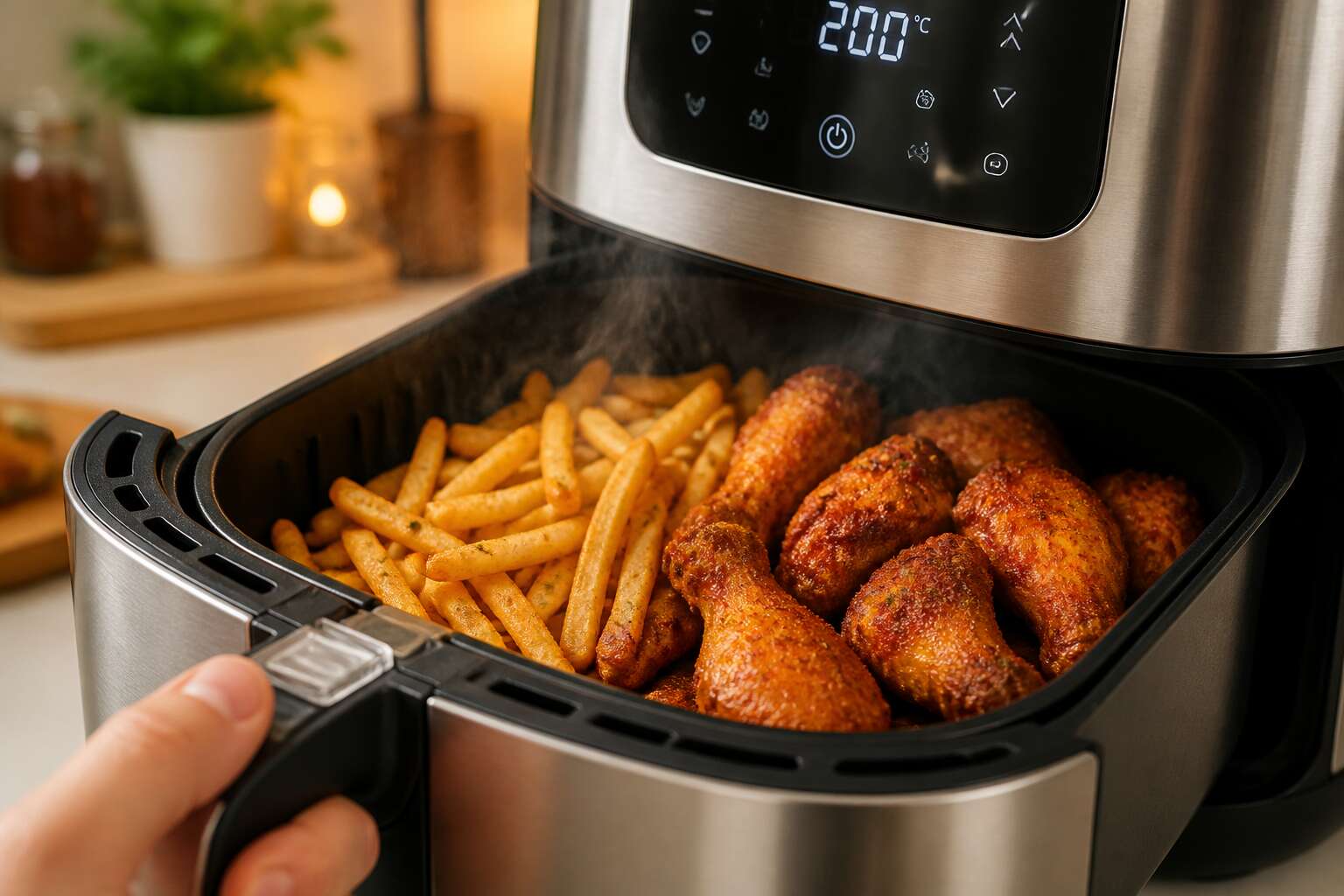
Why Air Fryer Cooking Is a Game-Changer
Healthier Frying Without Oil
Our dependence on liquid oil is nearly unconscious. A typical South African kitchen empties a two liter bottle every fortnight. air fryer cooking forces a confrontation. You cannot pour; you must place. That physical act shifts your attention from convenience to intent.
The absence of oil changes how your body responds. You feel the heaviness gone. Consider the practical shifts:
- you handle less raw oil;
- you smell less rancid fat;
- you consume fewer hidden calories.
This method introduces a directness into meals. The crunch no longer masks the food’s true texture. You taste the ingredient. That is a form of honesty. It challenges the myth that frying equals flavor. This method feels like liberation.
Faster Cooking Times
A typical oven preheats for fifteen minutes. An air fryer cooking session reaches temperature in three. That difference matters on a Tuesday evening when dinner needs to happen between meetings. The fan circulates heat so rapidly that a whole chicken cooks in half the expected time. I have stopped planning meals around the oven’s slow awakening.
Consider what that saves:
– Ten minutes here.
– Fifteen minutes there.
– Over a month, those minutes become a full evening reclaimed.
Faster cooking times also change how you shop. You can buy fresh ingredients on the way home and still eat by seven. Air fryer cooking compresses the gap between hunger and satisfaction. The machine accelerates the process and rewires your schedule. That is the game-changer.
Versatility Beyond Frying
The average air fryer spends most of its life frying. That is a shame, because the machine’s real talent lies elsewhere. Air fryer cooking can roast a cauliflower until it caramelises, bake a loaf of bread, reheat a pie without the pastry turning to leather, and dry herbs for the spice rack. The fan’s force is what makes this possible.
- Roasting garlic to a jammy softness
- Toasting spices for a curry base
- Dehydrating fruit for trail mix
South African kitchens have taken to this machine. It suits a household where load shedding makes oven use a gamble. Air fryer cooking provides a faster, more contained heat source. You can cook a full meal in stages, or run two baskets in tandem for a complete supper in a single sitting.
Energy Efficiency
South Africa’s electricity reality makes every appliance a calculation. Air fryer cooking draws a fraction of the wattage that a conventional oven demands. A standard oven pulls 2400 watts and heats the entire kitchen. The air fryer uses concentrated convection to reach temperature in minutes, then cycles the fan to hold it there. That difference shows up directly on the municipal bill.
The savings extend beyond raw wattage. An oven radiates warmth into the room for the full cooking cycle. The air fryer contains that energy within a small chamber, which is a relief when summer heat makes baking unbearable. For a household managing load shedding schedules, this efficiency matters. You can complete a bake before the grid dips, using less power than the kettle requires. I have cooked a full chicken in the time it takes the geyser to reheat!
Easy Cleanup
Cleaning up after air fryer cooking feels like a small reprieve. The non-stick basket releases food without the scraping a roasting pan demands. A warm soapy soak lifts the residue, and most inserts handle the dishwasher without complaint. There is no baked-on grime waiting for you the next morning.
The contrast is sharpest on the countertop. Traditional frying deposits an oily film over the stove and surrounding tiles. Air fryer cooking contains the mess inside the chamber, so the fan never sprays grease across the kitchen. I have yet to find a basket that does not rinse clean after a few minutes.
- No oil splatter on the hob
- No burnt-on fat in the oven
- No greasy trays to soak
After a busy weeknight meal, the cleanup takes minutes. That quiet convenience is the real game-changer for households where water and electricity both carry a cost.
Essential Air Fryer Techniques for Beginners
Preheating Your Air Fryer
In air fryer cooking, the preheat is the step most likely to be skipped by beginners. They assume the machine produces heat instantly. It does not. That assumption produces pallid, uneven results and a lingering sense of defeat.
Watch for the signals. The heating element glows orange for a short period, then cycles off. That is your cue. A practised eye also checks the digital display for the target heat, but I prefer the timer method, counting a full five minutes from switch-on.
- The fan sounds more assertive after preheating
- Steam rises immediately when food touches the basket
- The exterior of the fryer feels warm to the touch
Preheating is not fussy; it is a foundational habit. Without it, you are merely guessing.
Avoiding Overcrowding
Overcrowding is the second error beginners make in air fryer cooking. They load the basket to capacity, assuming more food means more efficiency. The opposite is true. When pieces touch, the fan cannot circulate heat around each surface. Food steams instead of crisping. I have seen this produce chips that are pallid on one side and damp on the bottom.
Work in batches. A single layer of food, with small gaps between pieces, delivers the texture you bought the machine for. Yes, it takes longer. The trade-off is worth it!
Here is what overcrowding actually does:
- Traps moisture against the basket surface
- Blocks airflow between pieces
- Forces repeated shaking that damages delicate coatings
- Extends cooking time beyond the recipe’s estimate
Give each ingredient space. That is the foundation of consistent air fryer cooking.
Shaking and Flipping
The basket demands attention. Shaking and flipping interrupt the settling of moisture that forms on food surfaces. This act redistributes thermal energy that the fan delivers.
Ignore this rhythm and the underside of a samosa stays pale. The crust on a chicken thigh develops unevenly. The texture reveals the neglect.
Shaking the basket every few minutes does more than move food. It exposes raw surfaces to circulating heat. Flipping with tongs ensures both sides receive equal attention. These small interventions define the difference between acceptable air fryer cooking and exceptional results.
Using the Right Amount of Oil
Most recipes overestimate the value of a lavish drizzle. Oil in air fryer cooking is measured in droplets, not drizzles. A single tablespoon, applied with a brush, coats a kilogram of vegetables evenly. I prefer a glass bottle with a fine misting head. It respects the food. An aerosol can does not!
Consider the act of oiling. The goal is a sheen on the surface of a paratha or a lamb tjop. Too much oil pools at the basket’s base. The fan circulates air, but not a puddle. The food steams instead of crisps.
- Spray from a distance of thirty centimeters
- Turn matte items halfway through
- Brush cut surfaces directly
Restraint distinguishes the cook who understands air fryer cooking from the one who merely operates it. The right amount in air fryer cooking is not a number. It is a condition of the surface.
Mastering Temperature and Time
Temperature and time govern air fryer cooking. Beginners set the dial and walk away, expecting obedience. The appliance responds to attention! A chop at 180 degrees Celsius for twelve minutes differs from one at 200 for eight. Texture depends on this.
Thermal inertia matters. Each drawer opening costs heat. Recovering it takes time, and time changes flavour. Thicker cuts need lower heat to cook through without scorching. Thin fillets need a brief, decisive blast.
I keep a notebook. Every batch earns a note: temperature, duration, outcome.
Useful starting points:
- Vegetables: 180 degrees, 10 to 15 minutes
- Chicken pieces: 190 degrees, 20 to 25 minutes
- Frozen snacks: 200 degrees, 8 to 12 minutes
These are beginnings, not rules.
Must-Try Air Fryer Recipes for Every Meal
Crispy Breakfast Hash Browns
The first crack of a hash brown under your fork reveals the success of air fryer cooking. The crust is dark and brittle, while the center stays soft and sweet. I tested this recipe for weeks, and the crucial step is shredding potatoes coarsely, then squeezing them dry before placing them in the basket.
Season with salt, white pepper, and a pinch of nutmeg. For South African palates, smoked paprika or chakalaka adds warmth. The dry heat of the air fryer creates a texture with a stubborn crispness.
Look for these markers:
- a crust that resists slightly, then gives way
- a pale interior that releases visible steam
Serve with eggs, or eat them straight from the basket.
Juicy Chicken Breasts
The first cut into an air fryer chicken breast reveals something unusual: clear juices, not the grey dryness that plagues pan-fried versions. This is where air fryer cooking earns its reputation. The rapid heat seals the surface quickly, locking in moisture that would otherwise escape.
Chicken breasts carry a perverse challenge. Their leanness means they dry out in the time it takes to set the table. In an air fryer, the hot air wraps around each breast evenly, producing a golden crust while the centre stays tender. I season mine with garlic, lemon zest, and a touch of peri-peri for local warmth.
What surprises most visitors is the texture. My sister once asked if I had brined the meat. I had not. Air fryer cooking simply concentrates the natural juices instead of letting them vanish into the kitchen air. My sister now owns an air fryer.
Perfect Roasted Vegetables
Roasted vegetables have never demanded this little attention. Once the air fryer reaches temperature, the process becomes passive. I cut cauliflower into thick slabs, coat them in olive oil and smoked paprika, and let the circulating heat do the work. What emerges is a contrast: crisped edges, yielding centres, and a sweetness that builds.
- Broccoli stems turn crisp within eight minutes
- Sweet potatoes develop caramelised edges at 190 degrees
- Butternut softens into strands with a touch of honey
The result changes how you approach a side dish. I serve these vegetables with braaied lamb or fold them into couscous for weekday lunches. Air fryer cooking rewards patience with texture, and texture alone justifies the purchase.
Homemade French Fries
There is a particular joy in pulling perfectly crisp chips from the basket with air fryer cooking. Homemade French fries demand little more than a potato, oil, and patience. I cut spuds into even batons, soak them in cold water for thirty minutes, then dry them thoroughly. That step makes all the difference! The starch washes away, and the surfaces crisp without sticking.
- Use starchy potatoes like BP1 for the fluffiest interiors
- Season with salt and vinegar while hot
- Shake twice for even browning
Air fryer cooking transforms humble ingredients into something more deliberate. At 200 degrees, the chips develop a golden crust within fifteen minutes. The inside stays soft, almost buttery. I abandoned the deep fryer. No oil smell lingers in the kitchen, no dangerous splatters. Just the quiet hum of the fan and the reward of a satisfying crunch.
Quick Desserts and Cakes
The quiet hum of an air fryer oven at dusk signals something sweet. In South African kitchens, where load shedding once made ovens unreliable, air fryer cooking has become a quiet rebellion. It promises warm dessert in minutes, without heating the whole house.
I start with a simple chocolate mug cake. Two tablespoons of flour, one of cocoa, a splash of milk, and a spoon of sugar. Stir directly in the mug and set the basket to 160 degrees. Seven minutes later, the top springs back, and the centre stays molten.
Fruit takes to the same treatment.
- Apples stuffed with cinnamon and raisins collapse into soft parcels
- Banana halves brown under a dusting of sugar
- Peach slices with an oat crumble turn jammy at the edges
A small round tin sits in the basket for a plain sponge. The circulating air bakes it evenly in twelve minutes.
Air Fryer Maintenance and Safety Tips
Cleaning Your Air Fryer Properly
Around 12% of South African households report appliance-related accidents each year, and many trace back to neglected kitchen devices. Your air fryer, despite its convenience, demands a level of care that many overlook. The residue that builds up inside the basket is not just an aesthetic problem. It becomes a fire hazard when exposed to high temperatures repeatedly. The act of cleaning becomes a conversation between you and your machine, a quiet acknowledgment that its continued performance relies on your attentiveness.
The exterior deserves a gentle wipe after each session. A damp cloth removes the inevitable splatters before they bake into a stubborn film. I always disconnect the unit first, allowing it to cool completely before touching any surface. For the interior, the removable parts, the basket and the tray, need a warm soapy bath. Do not submerge the base unit itself. That simple rule prevents electrical damage and keeps you safe.
– Always unplug the appliance before cleaning.
– Never use abrasive sponges on the non-stick coating.
– Check the heating coil for food debris after every few uses.
The filter, often forgotten, requires periodic inspection. A clogged mesh restricts airflow, forcing the fan to work harder and altering your results. This maintenance is not about perfection. It is about respecting the tool that delivers your meals. When you understand the mechanics, you realize that every careful wipe and rinse contributes to the integrity of your air fryer cooking. A clean machine is a predictable one, and predictability is the foundation of trust in your kitchen routine.
Avoiding Common Mistakes
Air fryer cooking appears forgiving, yet the machine punishes specific oversights. One common error involves placing the unit flush against the wall. The rear vent needs breathing room. Blocked airflow causes overheating and erratic thermostat cycling.
Another mistake surfaces when people ignore the crumb tray. Fallen crumbs bake onto the heating element. In South African kitchens where load shedding interrupts cooking cycles, a partially cooked basket left in a warm unit invites bacterial growth.
- Positioning the air fryer on a flimsy cutting board that traps heat.
- Using metal utensils that scrape the non-stick surface, then questioning why food sticks.
- Ignoring the odour of burning oil, which signals residue reaching flash point.
The thermal fuse protects most units. It blows when temperatures spike beyond design limits. Once that fuse trips, the unit is dead. Understanding these failure points transforms air fryer cooking into a deliberate practice.
Safe Handling of Non-Stick Coatings
Air fryer cooking depends on that delicate non-stick veneer. Thermal shock and abrasive cleaning chip it away. One scorched basket taught me to respect the surface. The coating is not eternal. It wears thin with each careless scrape. I have watched cooks attack the basket with steel wool, then wonder why their food clings.
- Dull patches or hairline cracks signal wear.
- A warm basket waits for cool water before washing.
- Silicone or wooden tools outlast metal on the surface.
Residue from burnt oil bonds to damaged spots. In humid South African summers, moisture seeps into micro-fractures. That leads to rust beneath the coating. Flaking surfaces shed particles into meals. Some units release these flakes during normal air fryer cooking. A rough texture calls for replacement. A wise cook checks the surface before every session.
Replacing Worn-Out Parts
The heating element glows with age. Air fryer cooking asks much of this rod. Eventually it cracks or stops. I replace it when ozone appears. The fan also grows tired. A grinding sound escapes the rear vent. Dust, oil, and Johannesburg humidity seize its bearing.
Do not wait for collapse. Check the pull cord, hinges, and thermal fuse. Each wears at its own pace. A loose drawer seal wastes heat. That prolongs cooking and burns electricity.
Replace in order of risk:
- The heating element.
- The circulating fan.
- The temperature sensor.
Use only genuine spare parts. Aftermarket pieces tempt with lower prices, but they fail fast. One cheap swap creates a fire hazard. Honour the machine. It feeds you.
Troubleshooting Smoke and Odors
Smoke billowing from the rear vent is a distress signal. In most cases, excess oil trapped in the base is the culprit. Air fryer cooking creates a fine mist of fat that settles on the heating element. The next cycle burns it off, producing acrid smoke that clings to the food.
Odors are more stubborn. Spices like turmeric or peri-peri leave a molecular residue that normal wiping does not remove. A thermal breakdown occurs at high temperatures. The machine smells like last Tuesday’s dinner. The solution is a sacrificial cycle, running the unit empty at 180°C for ten minutes to burn off the fan and mesh. Do this outdoors if possible.
Sometimes the problem is electrical. Loadshedding causes power dips that stress the internal components. A burning plastic smell, distinct from food smoke, requires immediate attention. Unplug the unit and inspect the socket for scorch marks.
Keep a checklist for sudden smoke:
- Pause the cycle and pull the drawer straight out.
- Assess the level of residue on the mesh and heating coil.
- Check for food debris wedged behind the basket.
Resuming air fryer cooking without addressing the source will ruin the batch. It also degrades the internal wiring. Clean the basket, wipe the coil with a dry brush, and restart. Reliability returns when the airway is clear.
Advanced Air Fryer Hacks You Need to Know
Using Parchment Paper and Accessories
Air fryer cooking has one flaw: the basket. Parchment paper liners solve that problem. They catch oil runoff while letting hot air circulate freely. Cut your own rounds or buy perforated ones. Leave a gap around the edges so the fan does not blow the paper into the heating element. That last bit is a real risk, trust me.
A silicone divider tray lets you cook fish and chips without them mingling. A metal trivet adds a second level for taller items. These accessories work well in most units:
- Perforated parchment for crispy bases
- Silicone tongs for safe flipping
- Stackable racks for batch cooking
They cut down the need to rotate batches. You load, set, and wait. That is the real joy of air fryer cooking.
Layering Flavors with Marinades
Air fryer cooking changes the rules for marinades. The rapid fan circulation strips away excess liquid before it can cling to the surface. A thin, aggressive marinade outperforms a thick, syrupy one. Citrus zest, garlic paste, and a pinch of smoked salt penetrate deeper in half the time.
For South African palates, the options expand. Biltong spice, peri-peri oil, or even a dash of rooibos tea syrup create layers that develop as hot air works around each piece. I have found that timing matters. Add wet ingredients first, then layer dry rubs partway through cooking. That builds a crust without steaming the exterior.
- Whole spices tossed in at the start release oils gradually
- Fresh herbs dropped in during the final minutes perfume without scorching
- A final glaze brush caramelizes under the fan
Air fryer cooking rewards patience. The basket becomes a controlled environment where flavors concentrate rather than dissipate.
Reheating Leftovers to Crispy Perfection
Reheating leftovers in a conventional oven turns yesterday’s pizza into cardboard. A microwave turns it into a limp, wet disappointment. Air fryer cooking restores the original texture with almost no effort. The fan forces moisture away from the surface while the heat revives the interior.
My preferred method: reheat at a lower temperature than you expect. 160°C works for most foods. The goal is not to cook further but to drive out trapped steam. For crispy items like samoosas or vetkoek, add a few minutes at the end.
- Bread rolls benefit from a light water spritz before reheating
- Delicate fish stays moist when wrapped in foil
- Gaps between pieces allow hot air to reach every surface
Reheated chicken stays juicy, chips regain their crunch, and leftovers actually get eaten. Weekday lunches just improved!
Cooking for One or a Crowd
One small appliance handles Tuesday’s solo dinner and Sunday’s family gathering with equal poise. I have prepared a solitary chicken thigh in a basket designed for four, and I have also fed twelve people from the same machine by staggering batches and using a stacking rack. Air fryer cooking rewards small adjustments, not large ones.
For one person, invest in a smaller perforated insert or a silicone liner. For a crowd, preheat, then load ingredients by cook time.
- Parboil potatoes before the party, then finish them in batches.
- Cut proteins to uniform thickness so every piece finishes together.
- Use cocktail skewers for bite-sized braai leftovers.
I have found that air fryer cooking changes character when you move beyond single servings. The fan circulates heat with such aggression that staggered batches demand patience between loads. Models with twin baskets develop their own rhythm.
Adapting Oven Recipes
Oven recipes assume a large, humid environment. Air fryer cooking operates on the opposite principle; concentrated heat and brisk circulation. My first attempt at converting a slow-roasted lamb recipe taught me to reduce temperature by roughly twenty degrees Celsius and shave a third off the cooking time!
The mathematics are simple. Less volume means faster heat transfer. A casserole designed for a Dutch oven will overcrowd a basket meant for one layer. The real art lies in reading the recipe’s intention. A crust that develops in the oven might burn in the fan’s assault.
- Liquid levels need sharp reduction, since evaporation accelerates.
- Doneness should be checked at half the stated time.
- Ingredients cut smaller reduce surface area and protect crusts.
South African oven recipes, from bobotie to bredie, respond well when the air fryer becomes a finishing tool. Air fryer cooking rewards the cook who adapts familiar dishes with restraint and observation.


0 Comments