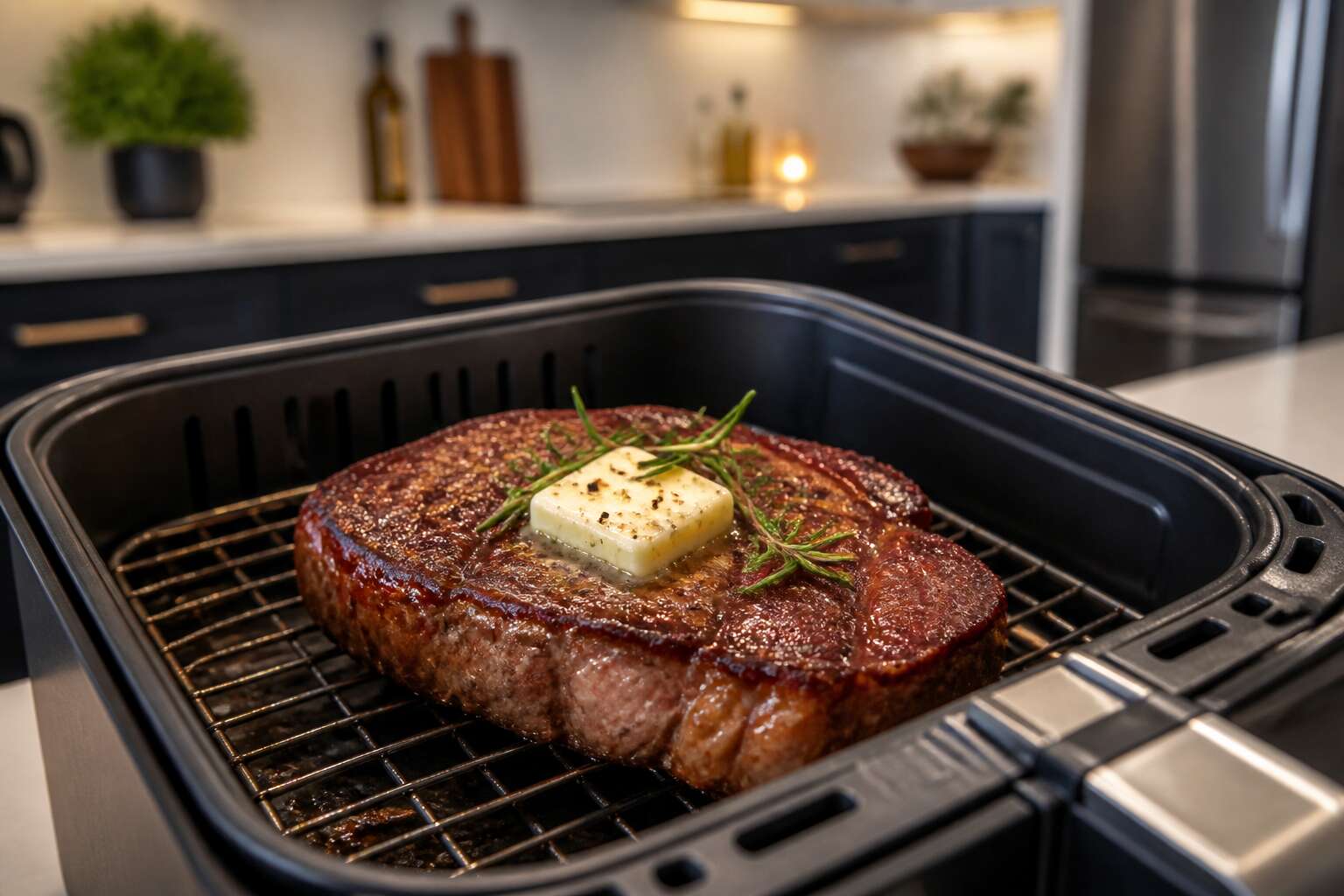
Why the Air Fryer Is a Steak Game-Changer
Benefits of Air-Frying Steak
Most home cooks assume a good steak needs a screaming pan or a smoky grill. The air fryer changes that thinking altogether. A fan circulates heat around the meat, searing the outside while the interior stays pink and tender. You get a crust that rivals cast iron without the splatter.
The benefits of air-frying steak extend past convenience. The machine heats fast and holds temperature steadily. Dry heat pulls moisture from the surface, which improves browning. For South African households facing load shedding, the airfryer steak method offers a dependable backup. It preheats quicker than an oven and draws less power. The final airfryer steak comes out caramelised on the outside and juicy within.
What you gain:
- Faster cooking than pan-frying
- Little to no oil required
- No grease splatter to clean
How Air-Fried Steak Compares to Pan-Seared
Home cooks have long believed a quality steak demands a cast iron pan or a charcoal grill. That belief survives more on habit than on fact. The airfryer steak method removes the guesswork entirely.
Pan-searing rewards those who hover. You need constant attention and a feel for the heat. One misplaced second gives you a burnt exterior and a raw centre. The air fryer’s circulating heat reaches every surface evenly. The outside develops a rich crust while the inside keeps its pink blush. No rituals required.
Consider the practical differences:
1. Pan-searing fills the kitchen with lingering grease odours.
2. The air fryer contains the whole process.
3. A pan locks you to the stove.
4. The air fryer runs while you sort the side dishes.
The airfryer steak approach fits the South African kitchen, where electricity and time matter deeply. It delivers a consistent result without theatrics or anxiety.
Best Steak Cuts for the Air Fryer
An air fryer threatens the old steak hierarchy. The violent circulation of hot air creates a crust across every surface, whereas a pan only touches the bottom. That is the game-changer for anyone who wants an airfryer steak without the ritual of a cast iron pan. The top and bottom crisp at the same rate while the interior holds its blush, so you no longer hover over the heat with a stopwatch.
The best airfryer steak begins with the cut. Some respond to the air fryer better than others.
- Ribeye leads, with marbling that renders and keeps the meat moist.
- Sirloin holds up well, giving a leaner yet satisfying bite.
- Rump, a staple of South African butchers, balances flavour and tenderness.
- Fillet needs a short timer and a deliberate rest, as it lacks protective fat.
I look for a fat cap or visible marbling. The air fryer’s heat will render that fat into the meat, while lean steaks dry out fast. That is the secret!
Common Air Fryer Steak Mistakes to Avoid
Why the Air Fryer Is a Steak Game-Changer
Most people treat the air fryer as a compromise. They are mistaken. The air fryer rearranges how heat meets meat. A cyclone of hot air strikes every surface at once, so crust forms evenly without hovering over a pan. You place the steak in, you wait, you remove it. That simplicity hides a deeper truth. An airfryer steak made this way requires trust in the process, not constant intervention.
Common Air Fryer Steak Mistakes to Avoid
Yet the machine punishes careless handlers. The margin for error is narrow and most failures come from impatience.
- Overcrowding the basket, which traps moisture and boils the surface instead of browning it.
- Dropping a cold steak straight from the fridge, forcing the outside to char before the middle warms.
- Cutting into the meat too soon, letting the juices flood the board.
Every mistake is impatience. Respect the fan, respect the heat, and the airfryer steak rewards the same patience it demands.
Selecting and Prepping Your Steak for the Air Fryer
Choosing the Right Cut and Thickness
The perfect airfryer steak starts with a slab that respects hot air physics! Thickness dictates everything; a 3 centimetre ribeye outperforms a skinny cut because circulating heat needs time to render fat. Trim the edge to 1 centimetre, no more.
Pat the surface until no moisture remains, then season with coarse salt and cracked pepper. Do not marinate; air circulation turns wetness into steam, which ruins a crust. Some cooks apply a whisper of bicarbonate to accelerate browning, a trick from charcuterie.
The real secret is temperature dissonance. Let the steak rest for 30 minutes, then flash it in a preheated basket. Choosing thickness also means accounting for your machine’s wattage. A 1500 watt unit treats a 2 centimetre sirloin as a sprinter; an 800 watt model needs a thicker slab to avoid a raw centre. This preparation respects the machine’s quirks.
Room Temperature vs. Cold Steak
At 4°C, a steak resists the airfryer’s heat. At 18°C, after a half hour on the counter, it accepts that heat evenly. The cold steak develops a crust while its centre remains raw. The rested steak lets the hot air travel through the muscle fibres without interruption. In my kitchen, this determines whether your airfryer steak has a uniform pink interior or a stubbornly purple core.
The starting temperature shapes the result:
- A cold steak creates a steep temperature gradient, producing a grey band beneath the crust.
- A rested steak cooks evenly because the fibres relax and transfer heat.
- A partially frozen steak is worst; the surface cooks while the inside stays dense.
A slab left on a wire rack, uncovered, as the basket preheats, dries on the surface and rises in temperature. The airfryer steak turns out as intended. The counter does the work; the machine finishes it.
Dry Brine and Marinade Strategies
A steak’s fate in the air fryer is sealed hours before the basket heats. Dry brining, which means salting the surface and leaving it uncovered in the fridge, pulls moisture out and then reabsorbs it with seasoning. This concentrates the natural flavour and dries the exterior, giving the airfryer steak a crisp crust without the grey band that plagues rushed cooking.
Marinades work differently. They introduce liquid and acid, and inside a high heat fan chamber, that liquid evaporates and steams the surface, delaying the sear. For the airfryer steak, save marinades for lean cuts like sirloin, and keep them brief.
- Dry brine: 45 minutes per centimetre of thickness.
- Marinade: 2 hours maximum for a lean cut.
Pat the surface dry before either method. The counter rest, mentioned earlier, still applies. The brine or marinade alters the fibre’s response, but the drying finale sets the stage for even heat acceptance.
Seasoning Blends That Shine
Seasoning an airfryer steak is less about quantity and more about timing. The brine has already handled the salt. A spice blend applied just before the basket slides in must survive intense airflow. Coarse pepper, smoked paprika, and a spoon of garlic granules cling better than fine powder. They toast rather than burn. Crushed coriander seed adds a citrus note that flatters beef without drowning it.
For a braai-inspired blend, try this:
- 2 parts smoked paprika
- 2 parts coarse black pepper
- 1 part garlic granules
- 1 part crushed coriander seed
Rub oil onto the steak first, not the seasoning. Oil on seasoning forms a paste that washes off in the fan. Oil on meat gives the blend traction. The airfryer steak develops a crunchy, seasoned crust. A little restraint goes further when heat moves at speed.
Using Butter and Aromatics
A steak for the air fryer deserves more respect than a desperate grab from the bargain bin. You want a cut with decent marbling and a thickness of at least 2.5 centimetres. Anything thinner will overcook before a decent crust forms, and you will be left chewing on regret. The fan is unforgiving. A proper rump or sirloin, aged for at least 21 days, handles the blast of heat with better grace. That aging develops a deeper flavour that stands up to the airfryer steak cooking method.
Prepping is where butter enters the conversation. Forget melting it over the finished product. Cut a cold knob of butter and stuff it into a slit you carve into the side of the meat. As the airfryer steak cooks, the butter melts from within, basting the fibres. Add aromatics to the air fryer basket itself:
– A smashed garlic clove or two
– A sprig of fresh rosemary or thyme
– A bay leaf
These scent the circulating air. The steak absorbs the fragrance without needing a heavy sauce. The butter also helps carry the seasoning from the previous step deeper into the meat. The result is a juicy interior and a crust that has actual flavour underneath, not just char.
Pressing and Drying the Surface
The moment before your airfryer steak enters the machine is where most people fumble. They prep, season, and then drop a damp piece of meat into the basket. The crust never forms. The surface boils instead.
Pressing and drying go together. Use paper towels to blot every side of the steak. Press with your palm until the meat feels firm and even. This removes surface moisture and encourages consistent contact with the hot air.
You know the surface is ready when:
- The paper towel comes away with no visible wetness
- The steak feels tacky, not slick
- Fingerprints remain briefly when you press the meat
The exterior of the airfryer steak is now primed for browning. The fan does the rest, and that dry surface transforms into a crust worth eating.
Mastering Air Fryer Steak Times and Temperatures
Complete Temperature Guide from Rare to Well-Done
Mastering the airfryer steak comes down to internal temperature, not cooking time alone. The gap between a perfect medium-rare and an overdone centre is often just five degrees Celsius. I always tell readers to trust the thermometer over the timer!
- Rare: 50 to 52°C
- Medium-rare: 55 to 57°C
- Medium: 60 to 63°C
- Medium-well: 65 to 68°C
- Well-done: 71°C and above
Air fryer steak times shift with thickness and your specific appliance. A 2 cm cut hits medium-rare in roughly 10 minutes at 200°C, flipping once. A 4 cm ribeye needs closer to 14 minutes. Remember carryover: the centre keeps climbing 2 to 3 degrees while resting. Pull the steak before it reaches the target, not after.
Cooking Times by Steak Thickness
Thickness dictates the clock. A 2 cm sirloin behaves nothing like a 4 cm ribeye in the basket, and treating them as equals invites an overcooked centre. The airfryer steak timer should be set by the ruler, not guesswork. Here is the rough breakdown for 200°C with a single flip:
- 2 cm thick: 10 minutes
- 3 cm thick: 12 minutes
- 4 cm thick: 14 minutes
These figures assume one layer of meat. Stacking or crowding the basket drops the effective heat and stretches every minute. Your specific airfryer steak results may vary by brand, so treat these as a practical reference. Check the crust at the halfway mark and adjust.
Preheating and Basket Setup
Preheating transforms the airfryer steak from a compromise into a ritual. A cold basket steals the searing heat before it ever reaches the meat, leaving the surface pale while the centre races ahead. Give the chamber five minutes at full temperature before the steak arrives. The fan must spin freely, with nothing obstructing the flow.
Basket setup matters just as much. A single layer of meat, edges apart, allows the hot air to find every surface. The perforations underneath need clear contact, so avoid foil or paper that blocks circulation.
Consider these signals that the machine is ready:
- The element glows and cycles rather than staying dark
- The basket handle feels warm to the touch
- A drop of water sizzles and vanishes instantly
Only then does the timer become honest. The airfryer steak will reward the preheat with a proper crust, and the temperatures you select will behave predictably. Without this foundation, every minute in the basket works against your meal.
When to Flip and How to Monitor
Your airfryer steak has no idea what the recipe said. It responds to the temperature inside the chamber, which often runs hotter or colder than the dial claims. That is the real reason to master times and temperatures. Trust a probe thermometer over the display, especially during the final minutes, because the internal temperature climbs after removal.
Flipping matters, but less than you think. The fan circulates heat over both surfaces. So flip once, at the halfway mark, to promote even colour rather than to change crust formation.
- Check the reading at the thickest point, not near the bone.
- Allow a 2°C carryover before pulling it out.
- Rest longer if the exterior looks too dark while the centre lags.
Monitor without touching the basket. Opening it resets the heat gain. Watch the display, listen for the fan cycling, and resist the urge to peek. A monitored airfryer steak reaches its target temperature more reliably.
Resting Your Steak for Maximum Juiciness
Mastering airfryer steak times and temperatures does not end when the basket stops spinning. It ends on the cutting board, after a deliberate rest. The fan-forced heat creates a steep thermal gradient inside the meat, so the internal temperature climbs between 2°C and 4°C after removal. If you pull the steak at the exact target, it will overshoot. Pull it early and let the carried heat complete the cook.
The resting phase is where juiciness is secured. Contracted muscle fibres release their grip on moisture, allowing it to redistribute evenly. I have watched hasty slices drain a perfect airfryer steak onto the board.
- Thicker cuts carry more heat and need a longer settle period
- Room temperature changes the pace of carryover
- A warm plate slows the temperature drop
Rest your airfryer steak for roughly half of its cooking time. Mastery of these final minutes protects the moisture that makes the effort worthwhile.
Pro Tips for a Juicy, Crusty Air-Fried Steak
How to Build a Delicious Bark
A good bark is a negotiation between surface and heat. In my kitchen, the airfryer steak that emerges with a deep, caramelised crust starts with a paradox: you must dry the meat to brown it. I lightly smear the exterior with a neutral oil, then season with coarse salt. The air fryer’s fan accelerates moisture removal, which is why I don’t open it to check too often.
For extra crunch, I dust the steak with a whisper of cornflour before searing. It sounds odd, but it works. For any airfryer steak technique, a little patience pays off:
- Keep the steak at least 2 cm away from basket edges to allow airflow.
- Flip only once, after a solid crust has formed.
- Let the steak rest on a rack, not on a plate, so steam doesn’t soften the bark.
The payoff is a juicy, salty crust that you can hear when you slice.
Infusing Flavor with Compound Butter
Compound butter does more than melt across the surface. It seeps into the crevices carved by the air fryer’s fan, carrying garlic, rosemary, or smoked paprika into every bite. The trick is to apply it after the crust sets, not before. Early butter burns. Late butter pools. I place a coin of chilled butter on the steak during the final minute of cooking, then let it finish the job during rest.
For a proper infusion, use salted butter softened to room temperature. Mash in minced herbs and a splash of Worcestershire sauce. Roll it into a log, chill it, and slice coins as needed. One coin per steak is enough. The airfryer steak carries the flavour without drowning the meat.
- Add the butter after flipping, not at the start.
- Rest the steak with the butter on top, never stirred.
- Use cold butter for a slower, deeper melt.
Why Resting Matters
A steak’s fate is sealed after it leaves the basket. The crust is set, the interior still climbing. Resting is not a pause but a continuation. I place mine on a wire rack, never a plate, so the underside stays dry. A plate traps steam and ruins the sear.
For a thick cut, rest it inside the switched-off air fryer with the drawer ajar. The residual heat finishes the cooking. A nine-minute steak needs six minutes of silence. The airfryer steak rewards this patience with a rosy center and a shattering crust.
Slicing Against the Grain
Slicing against the grain is the final skill that separates a good airfryer steak from a transcendent one. The muscle fibers run in parallel lines; cutting across them shortens those fibers into tender, manageable pieces. Cutting with the grain leaves long strands that resist chewing, even if the steak is cooked perfectly. This simple directional change costs nothing but transforms every bite.
For my own airfryer steak, I locate the grain by looking at the raw surface before cooking. The lines are usually visible. Then I rotate the cooked steak ninety degrees before slicing. A thin, sharp knife does the work without shredding the crust.
1. Let the steak rest completely first.
2. Place it on a cutting board with the long side facing you.
3. Find the direction of the muscle fibers.
4. Slice perpendicular to those lines.
Each piece then holds its moisture and the crust stays intact. The clean cut also exposes the rosy interior, making the airfryer steak look as good as it tastes.
Tasty Air Fryer Steak Recipes and Variations
Classic Garlic Butter Steak Recipe
An airfryer steak changes how butter behaves. For the classic garlic butter recipe, melt 30 grams of unsalted butter with two crushed cloves and a sprig of rosemary. Brush this over a room temperature fillet before cooking at 190°C for six minutes. Flip, brush again, and continue for another four minutes. I prefer this double application because it builds a glossy crust without burning the dairy solids.
- Add a teaspoon of smoked paprika to the butter for a smoky edge.
- Stir in a dash of Worcestershire sauce for umami depth.
These variations transform the same base into a different meal entirely!
Steak and Veggie Sheet-Pan Air Fryer Meal
For a complete weeknight meal, combine airfryer steak with vegetables on a single tray. The airfryer’s rapid circulation cooks both components simultaneously, which saves time and reduces washing up. I like to slice peppers, red onion and baby potatoes, toss them in olive oil and season with salt. The vegetables go in first for five minutes, then the steak sits on top.
- Baby potatoes, parboiled
- Green beans, trimmed
- Cherry tomatoes, left whole
The steak releases juices that flavour the vegetables below. No separate sides are needed, just a generous resting period before serving.
Spicy Cajun Steak Bites
Spicy Cajun steak bites turn a simple airfryer steak into a lively meal. Cut the meat into cubes, toss them with Cajun seasoning and a splash of oil, then load them into the basket. The high heat creates charred edges while keeping the centres pink. It takes under ten minutes from start to finish.
Here is what works well with these bites:
- creamy coleslaw
- buttery cornbread
- pickled red onions
The list adds a practical touch. I often use sirloin or rump for this dish. The spices cling to every surface, so every piece carries a punch. Serve the bites straight from the basket, with a wedge of lemon for brightness. That is the beauty of this method, it is fast, forgiving and full of flavour.
Quick Pepper Steak Stir-Fry
Most stir-fries demand a screaming hot wok, but the airfryer steak method bypasses the splatter entirely. Slice sirloin thinly against the grain, then toss with soy sauce, garlic, and a teaspoon of cornstarch. Set the airfryer to 200°C and cook for four minutes.
The fan-driven heat creates caramelised edges without drying the interior. Add peppers and onions for the final two minutes. The texture stays crisp, not limp. Use flank or rump for the best chew. Vegetables that hold up well include:
- bell peppers
- red onion
- snap peas
- mushrooms
Each batch takes under eight minutes. This variation shows the air fryer can handle more than a plain fillet, with layers of savoury depth from the quick sear.
Air Fryer Steak with Mushroom Sauce
The airfryer steak method changes the story entirely. You get a hard sear without filling the kitchen with smoke, and the interior stays a deep, rosy pink. But a plain fillet can feel incomplete. This is where the mushroom sauce enters. It turns a simple weeknight meal into something far more indulgent. You create a rich, earthy companion while the meat rests, and the entire process takes less time than you would expect. It is a technique worth keeping for those evenings when you want a proper dinner without the ceremony.
The sauce begins in a small pan on the stove. You warm butter until it bubbles, then add sliced button mushrooms, allowing them to release their moisture and turn a deep amber. A splash of white wine lifts the browned bits from the pan, and a spoonful of cream thickens everything into a velvet finish. The airfryer steak cooks in the meantime, resting quietly on a board while the sauce finishes. When you slice the meat against the grain, the juices mingle with the mushroom mixture, creating a single, cohesive plate.
– Portobello mushrooms for a meatier texture
– Swiss brown mushrooms for a nuttier flavour
– Shitake for a softer, more aromatic bite
Choose one or combine them for extra depth. The sauce holds its own against the robust taste of the seared beef. It adds moisture without masking the crust you worked to build. Serve this with mashed potatoes or a simple green salad, and you have a dish that feels complete. The airfryer steak provides the structure, but the mushroom sauce provides the soul. That combination works every time.
Steak and Eggs Air Fryer Breakfast
The airfryer steak method works just as well at breakfast as it does at dinner. Steak and eggs become a single-basket affair, saving you from juggling multiple pans. Cook a thin sirloin or ribeye for a few minutes, then slide a ramekin of beaten eggs into the basket while the meat rests. The residual heat finishes the eggs gently.
- Soft scrambled eggs with chives
- A fried egg tucked under the steak
- Poached eggs served alongside
Each option changes the character of the plate. Serve with grilled tomato halves or a slice of sourdough. The airfryer steak creates a hearty start to the day without the usual kitchen chaos.
Air Fryer Steak FAQs and Troubleshooting
Can You Cook Frozen Steak in an Air Fryer?
Your steak is still frozen at dinner hour. I have been there. Can you cook it directly in the air fryer? Yes, but you will trade some control. A frozen airfryer steak responds differently to heat than a rested one. The exterior may brown while the interior stays cold.
The reliable method is a gentler start. Set a lower temperature to let the heat penetrate, then raise it for the final crust. You will need a probe thermometer and patience. This is not the moment for a thick, premium cut.
A quick checklist before you start:
- A thinner steak cooks more evenly from frozen.
- Expect to add five to ten minutes to the total time.
- The internal temperature at the thickest point is your guide.
This approach yields a serviceable airfryer steak, even when load shedding shortens your prep window.
Do You Need Oil for Air-Fried Steak?
Airfryer steak needs oil, but only a light touch. A thin coating helps seasonings stick to the surface and promotes even browning, especially for lean cuts like sirloin. Without it, the hot fan can dry the exterior before a crust develops.
Some cuts produce enough fat on their own. A marbled ribeye can cook bare, though a quick spritz of oil still improves the final sear. The real issue is excess, since too much oil pools in the basket and steams the meat instead of crisping it.
- High smoke point oils, such as avocado or canola.
- A thin layer, blotted with paper towel.
- Seasoning after oiling, so spices adhere without clumping.
The exact amount depends on the size of your airfryer steak and its thickness. Thicker portions need a little more protection over the longer cook.
Why Is My Steak Chewy?
Chewy steak has nothing to do with the air fryer itself. The most reliable cause is a poor cut match. Airfryer steak performs best with tender cuts such as ribeye or rump. Lean, sinewy cuts from the leg or shoulder will fight you no matter the cooking time.
- Check the meat’s internal temperature, not the clock, to avoid a tough crust.
- Allow a five minute rest, since carving early twists the muscle fibers into a tight mess.
Each of these steps directly changes the texture on your plate.
How to Clean Your Air Fryer After Cooking Steak
Few things dull the joy of a perfect airfryer steak like the state of the basket afterwards. The grease congeals fast. Scrub while it’s hot and you risk the non-stick coating. Let it cool completely, then fill the basket with hot soapy water and leave it for fifteen minutes.
I’ve found a soft sponge handles the softened residue best. Resist steel wool! For charred bits, a paste of bicarbonate of soda and water works without scratching. The heating element needs attention too. Wipe it with a damp cloth once the unit is unplugged and cool. Lingering fat smells usually mean the interior cavity needs a quick wipe. A clean basket also guarantees your next airfryer steak won’t taste like old fat.
- Wash the basket and tray separately in the sink
- Dry every component thoroughly before reassembly
- Wipe the interior cavity to remove odours
Best Sides to Serve with Air-Fried Steak
Can a steak emerge from the air fryer with a proper crust and a pink centre? Yes, when the basket is not overloaded. Crowded baskets trap steam and slow browning. Cook in a single layer!
For the plate, I keep the sides simple:
- Crispy potato wedges tossed in olive oil
- Charred baby corn with a squeeze of lime
- A simple tomato and red onion salad
Each side brings enough texture to match the steak without overwhelming it. The airfryer steak stays the focus of the meal. Some sides cook quickly; others need no cooking at all.




0 Comments