Unboxing and Initial Setup
There is a quiet ritual to unboxing. The box arrives, and you feel the anticipation. Inside, the Philips Airfryer sits snug, wrapped in recyclable cardboard. No frantic assembly. Just the machine, a basket, and a manual that actually makes sense. This is where the philips airfryer how to use journey begins.
Set it on a heatproof surface. Then prepare the basket:
- Pull it out and wash it with warm soapy water.
- Dry it completely.
- Slide it back in.
That is it! The machine hums when you plug it in, and you are ready to learn the philips airfryer how to use basics. Before cooking, run it empty at 200°C for ten minutes. This burns off any manufacturing residue. The smell is faint, almost metallic. It fades quickly. Then you begin.
Mastering the Control Panel
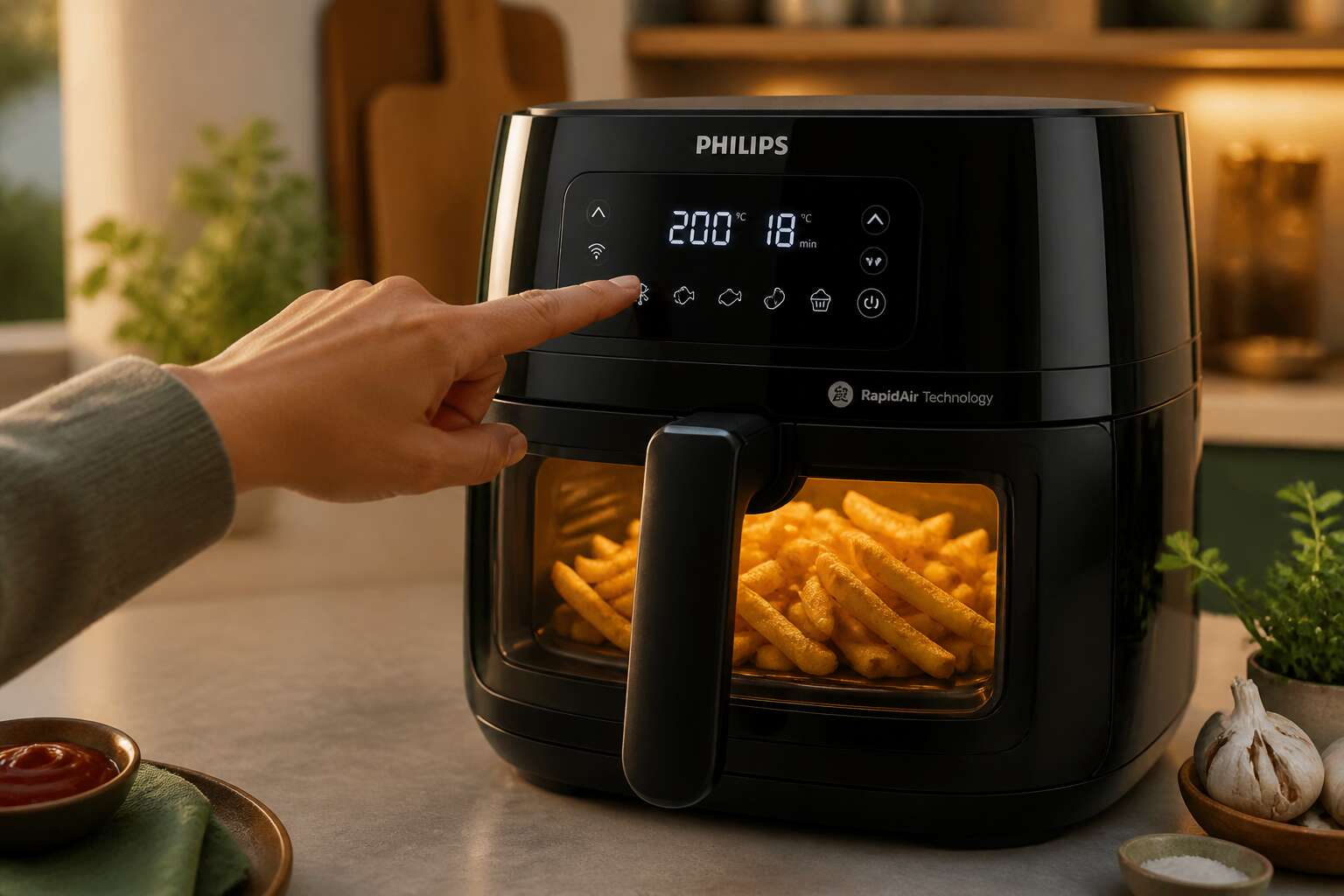
The control panel is where the philips airfryer how to use knowledge truly comes alive. I remember staring at those buttons, feeling the weight of possibility. The display shows temperatures and timers with quiet precision.
Here’s what I’ve learned through trial and error:
– The temperature dial responds to a gentle turn, not a forceful twist
– The timer button holds its value when pressed firmly
– The preset functions offer a starting point, not a final answer
Each setting changes the air circulation pattern inside the basket. A lower temperature preserves moisture. A higher one builds that golden crust. The experience becomes intuitive once you understand this rhythm!
Step-by-Step Cooking Guide
My first Philips airfryer session ended with burnt potatoes. The cause was simple! I skipped the preheat step. To save you that waste, here is the philips airfryer how to use in a straight sequence.
- Set the temperature before you load the basket. The dial clicks into place.
- Slide the basket in empty and let it run for three minutes.
- Pull the handle, add your food, and shake the basket once.
- Reset the timer to the cooking time stated in your recipe.
That last reset is the trick. Many machines ignore a timer set from a cold start. Once you respect this quirk, your food cooks evenly. Just listen for the fan to settle.
Cleaning and Maintenance
Cleaning your airfryer is more than a chore. It is the difference between a tired appliance and one that consistently delivers crispy, golden results. Grease and crumbs accumulate after multiple cooking sessions, and leftover residue can dull the taste of your next meal.
I always let the device cool completely before I start. Then I remove the basket and pull out the tray. The non-stick coating demands gentle treatment. Steel wool and abrasive scrubbers will scratch it, so I stick to warm water and a mild dish soap.
- Submerge the basket and tray in warm, soapy water.
- Soak for a few minutes to soften burnt-on food.
- Wipe down with a soft sponge.
- Rinse and dry each piece completely.
After that, I grab a damp cloth and wipe the interior cavity, focusing on the heating coil and the corners where oil splatter hides. Add this to your weekly routine. Understanding this part of the philips airfryer how to use process extends the life of your machine and keeps every meal tasting fresh.
Troubleshooting and Tips
When your philips airfryer how to use guide says to preheat, don’t skip it. I’ve seen inconsistent results when people rush this step. Give it three minutes. The basket should be empty. That’s the trick.
Suddenly the machine stops mid-cycle? Check the heating element. Food debris often collects there. A quick wipe with a damp cloth solves most problems. Also, shake the basket halfway through cooking for even browning. That simple motion prevents soggy spots.
- Always dry ingredients before adding oil.
- Use less oil than you think. The hot air does the work.
- Open the drawer during cooking to check progress.
Remember, every model behaves slightly differently. Read the manual’s troubleshooting section. The philips airfryer how to use principles stay the same, but your specific unit has its own quirks. Listen to the fan. A change in sound often signals something blocking the intake.


0 Comments